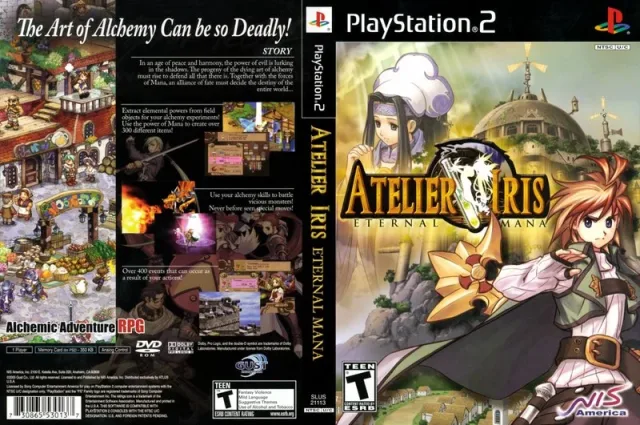
 1.4GB
1.4GB Atelier Iris - Eternal Mana
RPG 2005

Every attack turn is a small guessing game. You get a block of action points and a sequence of directional inputs to spend them on, and somewhere inside those strings are Arts you have not found yet — special moves that only exist once you happen to type them in the right order. The game tells you when you stumble onto one. It does not tell you what the rest are. That single design decision, inherited from the PlayStation original and refined here, is what separates this from the mountain of turn-based role-playing games that filled the PS2's first years.
Prokion's follow-up arrived in 2002 as a spiritual sequel rather than a continuation, with a new cast led by the swordsman Lang and a world where water and the spirits tied to it are the scarce, contested resource. The story is conventional stuff, competently told, and the localisation is serviceable without much personality. What holds attention is the fighting. Combos build meter, meter opens up Origin transformations that fuse a character with a summoned spirit, and the whole loop rewards players who keep notes and keep experimenting instead of mashing the confirm button.
It looks like an early PS2 game in the way that early PS2 games often did: bright, clean, slightly stiff, with pre-rendered flourishes that have not aged as gracefully as the art direction underneath them. Dungeons are linear and the towns are small. Random encounters come often enough that the combat system has to carry a lot of weight, and mostly it does, because the input layer keeps you present in fights that would otherwise be autopilot.
Critically it landed in the middle — respected for its battle design, dinged for everything around it — and that verdict has held up. The pacing sags around the midpoint, and the difficulty spikes assume you have been diligent about Arts discovery rather than coasting on basic strings. Players who treat the combo lists as a puzzle to be solved get a far better game than players who do not.
What remains striking is the confidence of the idea. Someone looked at the turn-based RPG, decided the problem was that pressing attack means nothing, and handed the player a fighting-game notation to work with instead. Few games since have tried it, and none of them tried it this seriously.
1.4GB 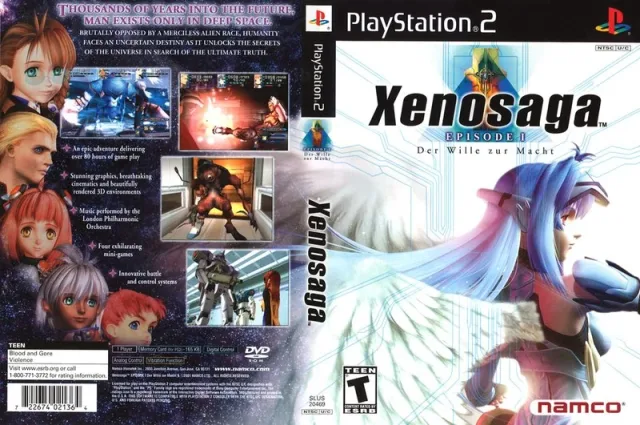 6.9GB
6.9GB 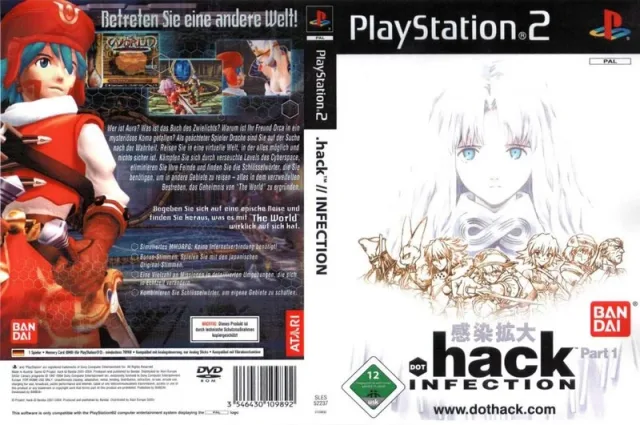 2.0GB
2.0GB 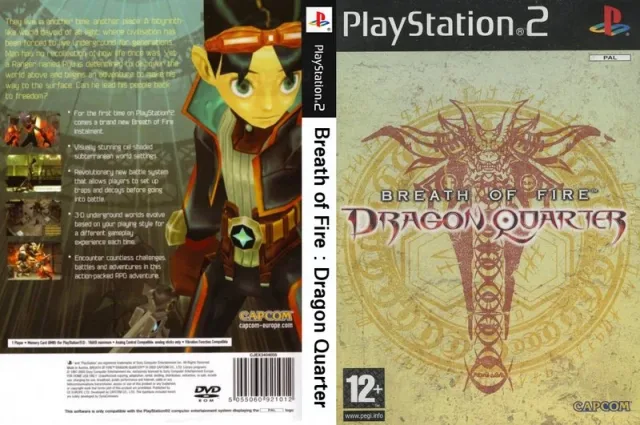 0.9GB
0.9GB  3.5GB
3.5GB  3.4GB
3.4GB  3.4GB
3.4GB  0.7GB
0.7GB loading comments…