 1.4GB
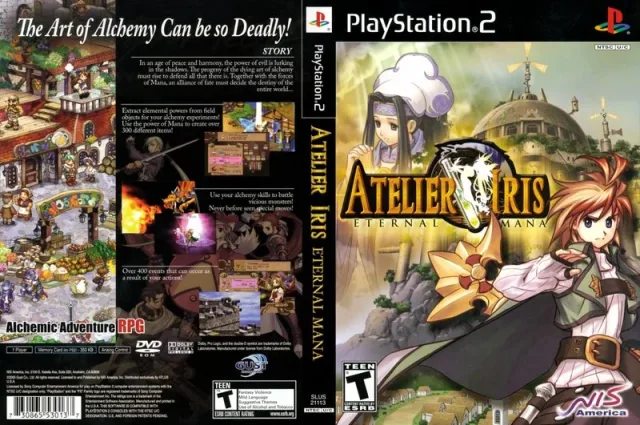
Atelier Iris - Eternal Mana
RPG 2005
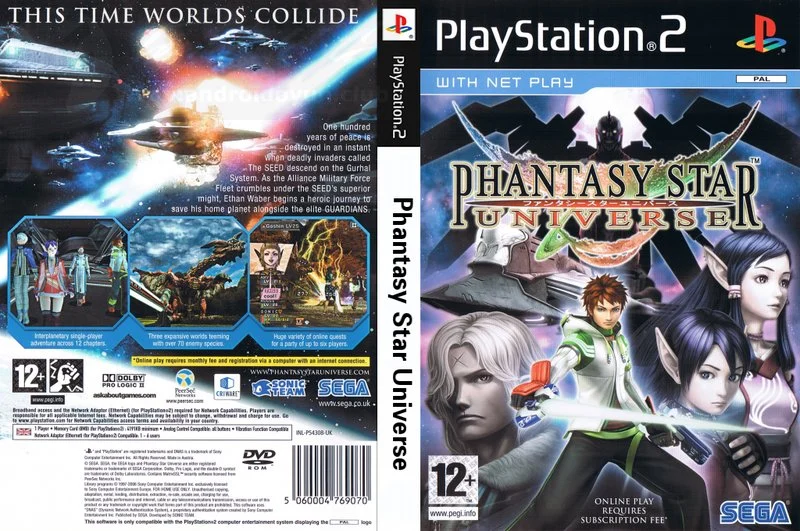
Ethan Waber's story mode is the strange part. Phantasy Star Online had been a game about lobbies and strangers and the quiet ritual of forming a party; its successor opens instead with a lengthy, voiced, cutscene-heavy campaign about a teenager, his sister, and an alien infestation called SEED. Sonic Team clearly wanted something that worked on a disc without a network connection, and the result is a dozen-odd hours of anime melodrama grafted onto a game engine built for repetition.
The combat is the honest inheritance from the earlier game, modernised just enough. Three weapon types per character slot, combo chains that reward timing rather than mashing, photon arts bought as discs and levelled through use. Sabres, rifles and rods all behave differently enough that build identity means something, and the class system lets a player move between Hunter, Ranger and Force without rerolling. It still looks like a game of menus and corridors, because it is, but the moment-to-moment hitting of things is crisper than the Dreamcast original ever managed.
What surrounds it is uneven. The online component, Phantasy Star Universe: Ambition of the Illuminus and the Network Mode on the base disc, ran on a subscription and has long since gone dark, which strips the PS2 version back to its offline content and its considerable amount of running between identical-looking relay points. The three planets are distinct in palette and little else. Loading is frequent. The voice acting ranges from serviceable to actively funny in ways nobody intended.
There is still a particular pleasure in the grind here, though, and it is worth naming. The game is generous with incremental numbers: a photon art creeping to the next level, a synthesised weapon that rolls better than the one before it, a party wiping a boss slightly faster than last attempt. That loop does not need other people to function, which is lucky, because other people are no longer available.
Played now, it is a museum piece with a working engine. The campaign is the least of it and the social layer is gone entirely, leaving a competent action RPG that was designed to be the smaller part of something much larger.
1.4GB  6.9GB
 2.0GB
 0.9GB
 3.5GB
 3.4GB
 0.7GB
 3.2GB
loading comments…