 1.4GB
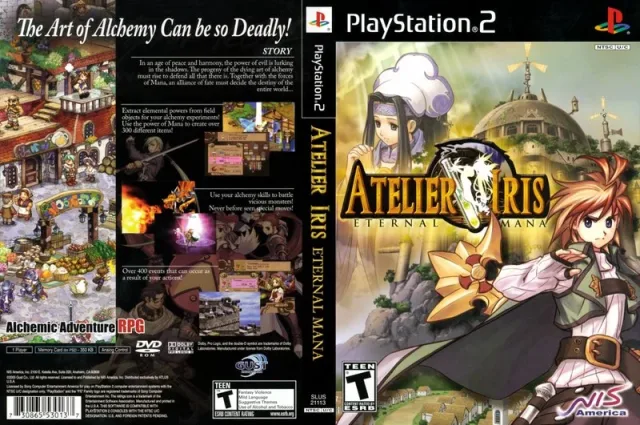
1.4GB Atelier Iris - Eternal Mana
RPG 2005

The first thing it asks is whether you have a memory card from last time. Import a Champions of Norrath save and your barbarian arrives intact, levels and loot and all, straight into a harder set of dungeons. In 2005 that was still uncommon on consoles, and it changed the pitch: this was less a fresh start than a continuation, built for people who had already ground a character to the cap and wanted somewhere to spend it.
Snowblind Studios had the Diablo-on-a-pad formula down by this point, refined across two Baldur's Gate: Dark Alliance games and the first Norrath. The engine still holds up unusually well. Dynamic lighting from spell effects, ragdoll bodies flung down stone corridors, four players hammering away in local splitscreen with the loot tumbling out in coloured rarity tiers. The right analogue stick handles movement, the face buttons handle attacks and hotkeyed abilities, and the whole thing runs at a pace that never lets a fight settle into rhythm for long.
What separates this one from its predecessor is the alignment split. Missions are offered by opposing forces, and choosing sides locks you out of content on the other branch, which means the campaign you play is meaningfully shorter than the campaign that exists. Some will call that replay value. It also means a single run can feel thin, and the connective tissue between missions - a hub, a portal, a briefing - is functional rather than dramatic. The EverQuest setting is scenery more than story; you are here for the drops.
Character building is where it earns its length. Five classes at the start with two more unlockable, skill trees deep enough that a wizard and a shadowknight play nothing alike, and gear that actually reshapes a build rather than nudging a number. Cooperative play remains the best version of it. Four people on one couch arguing over a rare drop is a specific pleasure the genre largely abandoned when it moved online.
It is a sequel that assumes you liked the first one and does not much care to convert anyone else. That confidence is its strength and its ceiling. Played today, the combat is still satisfying in a blunt, tactile way that modern loot games have mostly traded for spectacle, and the dungeons keep feeding you just enough to justify one more level. Bring a friend, or three; alone, the sound of your own footsteps in an empty corridor gets old faster than the loot does.
1.4GB  6.9GB
6.9GB  2.0GB
2.0GB  0.9GB
0.9GB  3.5GB
3.5GB  3.4GB
3.4GB  3.4GB
3.4GB  0.7GB
0.7GB loading comments…