 1.3GB
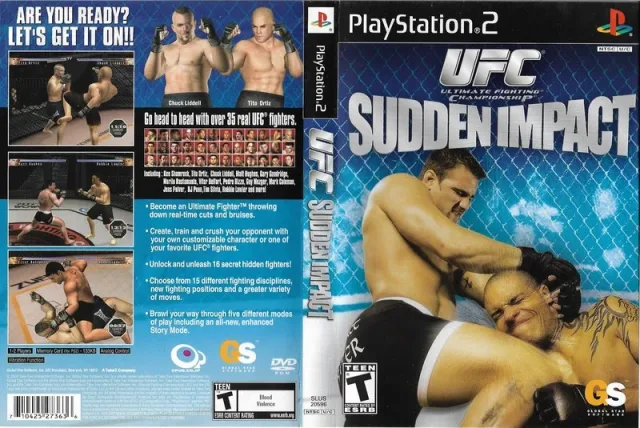
1.3GB UFC - Ultimate Fighting Championship - Sudden Impact
Fighting 2001

Watch a Randy Orton RKO in this game and you will see him hang in the air roughly as long as a basketball player in an old Midway arcade cabinet. That is the point. THQ had spent a decade steering the SmackDown series toward simulation, chasing reversal windows and stamina meters, and in 2011 it handed a separate team the license and told them to do the opposite. Wrestlers were redrawn as walking anatomy charts, gravity was treated as optional, and the strike button became something you could hold to charge like a fighting-game special.
The combat runs on four archetypes — acrobat, brawler, big man, grappler — and each one changes the rhythm rather than just the numbers. Light and heavy attacks in both strike and grapple flavours give you a small but real move vocabulary, and juggling an opponent into the air with punches before catching them in a slam is the loop the whole thing is built around. Finishers arrive with the camera swinging in and the frame rate deliberately hitching for effect. It is not deep, but it is legible in a way the simulation games often were not, and two people on a couch pick it up in a minute.
Fantasy Warfare is the mode that justifies the roster. It pairs a legend with a current star along a shared theme, plays a split-screen promo package arguing the case, then makes you settle it. Andre against The Big Show. Savage against Rey Mysterio. The videos are short and the matchups are the kind of thing wrestling fans have argued about in pubs for thirty years, which is exactly why the framing lands harder than a career mode would have.
The PlayStation 2 version is the compromised one. This was a late-cycle release on hardware already five years past its successor, and the exaggerated character models lose most of what made them funny on the sharper platforms — the veins, the absurd shoulder mass, the cartoon lighting. Crowds thin out, arenas simplify, and some of the animation snap goes with them. What survives is the mechanical core, which was always the strongest part.
It sold reasonably and never got a sequel, THQ's collapse arriving before anyone could refine the idea. That is a shame, because the underlying design solved a problem the annual games kept circling: wrestling is performance, not sport, and a game that treats it as spectacle rather than physics has an easier argument to make. Nothing since has swung this far in that direction.
1.3GB  1.1GB
1.1GB  0.9GB
0.9GB  1.6GB
1.6GB  3.0GB
3.0GB  1.6GB
1.6GB  0.5GB
0.5GB  0.5GB
0.5GB loading comments…