 1.3GB
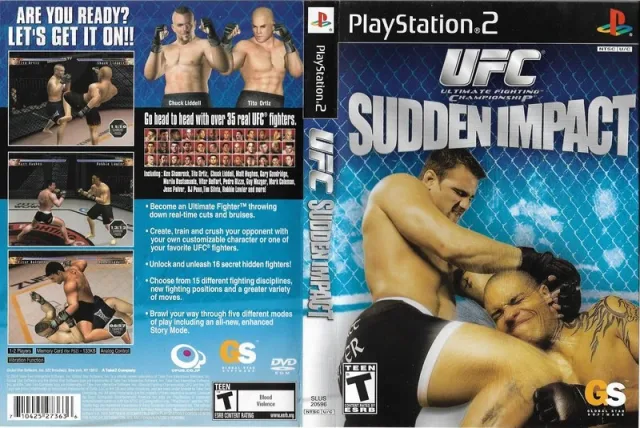
UFC - Ultimate Fighting Championship - Sudden Impact
Fighting 2001
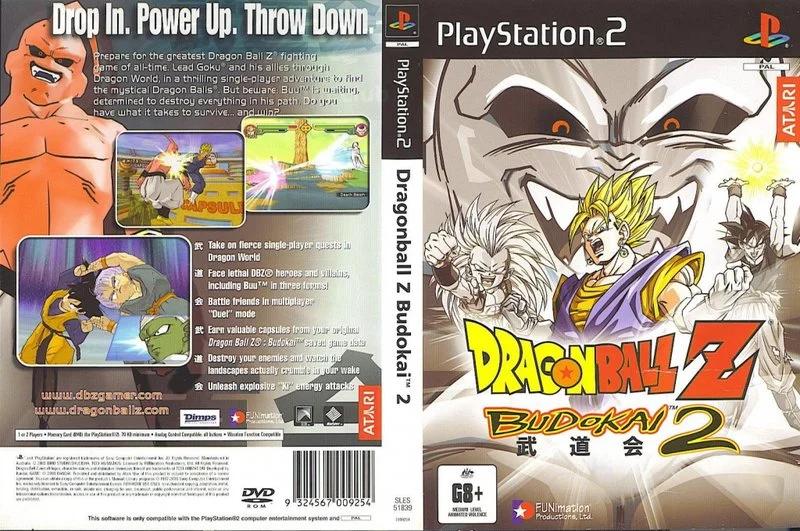
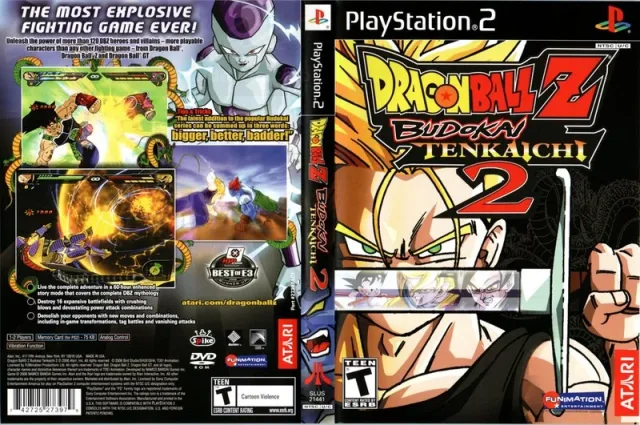
Dragon World, the mode that carries most of Budokai 2's single-player content, is not a story mode in any conventional sense. It is a board game. You move a chibi fighter square by square across a grid map, picking up capsules, triggering ambushes, occasionally stumbling into a boss, and when two pieces meet the game drops into a fight. It was a strange thing to build a Dragon Ball Z sequel around, and it remains the most interesting decision Dimps made here.
The fighting underneath is a refinement of the first Budokai rather than a rethink. Three-plane arenas with knockback into the distance, ki meters feeding beam attacks, a rock-paper-scissors rhythm of blocking, throwing and teleport counters. What changed meaningfully was the capsule system, which moved from story unlocks to a loadout you assemble before every match. Seven slots, limited space, and everything competes: senzu beans, transformations, signature beams, stat boosts. A Goku built for raw damage plays nothing like a Goku built to survive three rounds, and figuring that out is more compelling than the fights themselves sometimes deserve.
Fusion is the reason most people remember it. Collect the right capsules and characters can combine mid-match, and the game does not police the canon particularly hard. Gotenks and Vegito are there as expected, but so are the jokes, the fusions nobody at Toei ever drew, rendered with their own models and voice lines. It is the kind of fan-service flourish that a licensed tie-in in 2003 had no obligation to include, and it bought the game a lot of goodwill.
The cost is that the presentation went backwards. Budokai's cel-shaded cutscenes gave way to still portraits and text boxes, and Dragon World's map segments stretch thin well before you have seen everything. The Saiyan and Namek arcs get compressed to the point of incoherence for anyone not already fluent in the show. Roster size nearly doubled, but a lot of those characters share animations and feel like palette variations with different ki costs.
As a two-player game it holds up better than its reputation suggests, because the capsule loadouts give friends something to argue about before the match even starts. Budokai 3 would out-do it on nearly every technical front a year later, which is why this one tends to get skipped. Worth a second look anyway, if only for the sight of Krillin fused into something that should not exist.
1.3GB  1.1GB
 0.9GB
 1.6GB
 3.0GB
 1.6GB
 0.5GB
 0.7GB
loading comments…