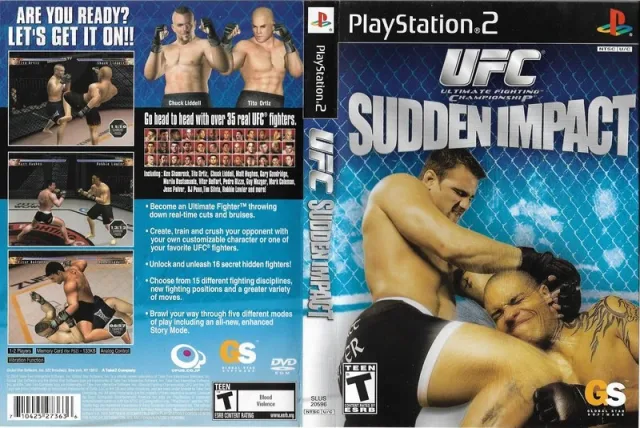
 1.3GB
UFC - Ultimate Fighting Championship - Sudden Impact
Fighting 2001
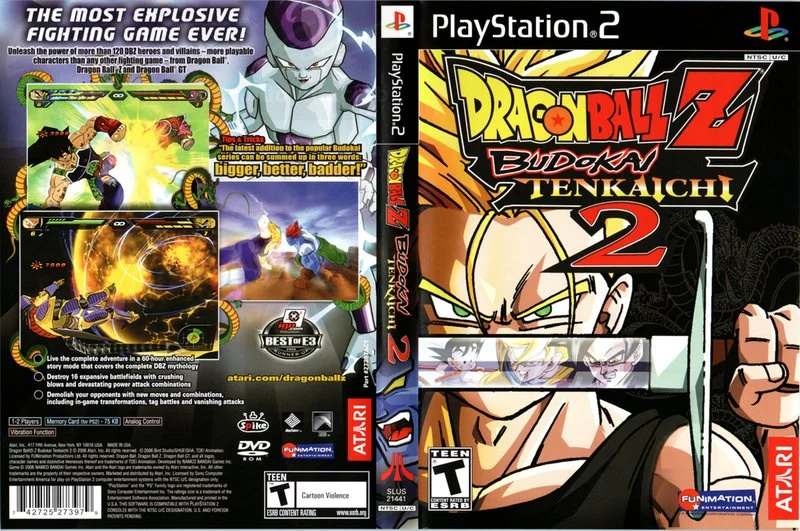
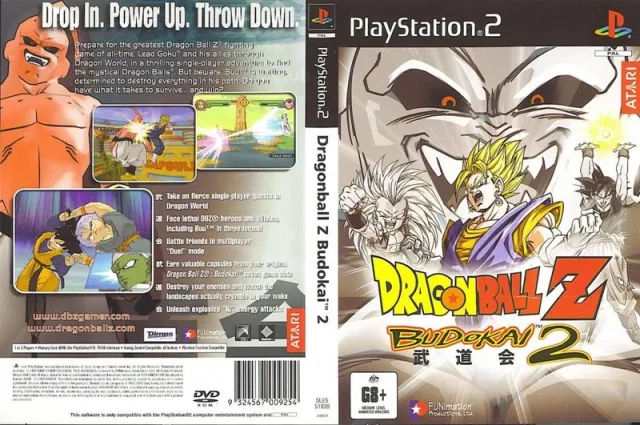
Most fighting games ask you to look at a stage as a pair of walls. Budokai Tenkaichi 2 asks you to look at it as a horizon. Its arenas are huge, you can fly anywhere in them, and the camera sits behind your fighter's shoulder rather than off to the side. That one decision separates it from the Budokai games that came before and explains why fans still talk about it.
The structure is simple to describe. You close distance, trade strikes, dodge, charge ki, and fire off special moves with quick button combinations. Beams can be fired, blocked, or clashed against each other, and when two collide the game turns into a short button-mashing contest. Terrain breaks apart as fights tear through it, mountains crumble, and a hard hit can send an opponent skidding across the ground for a long distance. It doesn't have the depth of a Virtua Fighter or Tekken. What it has is scale, and it manages to make a fight look like the show.
The roster is the real draw. Developed by Spike and published by Atari in the West, it packs in a huge cast drawn from across the Dragon Ball Z saga, including many transformations and alternate forms, so almost any matchup a fan can dream up is available. Its Z-Item and capsule systems let you tune a fighter's stats, and the story-driven Dragon Adventure mode walks through the sagas in a way that is more faithful than inventive. The mode that mattered most for many players was simply versus, with a friend on the same couch.
It has aged unevenly. Close-range combat can feel loose and repetitive, the lock-on camera sometimes turns on you during scrambles, and the AI at higher difficulties leans on cheap tricks. The menu design and the single-player structure are clunky. None of that has stopped the game from being remembered as the high point of the series on PS2, because few later games have matched the sense of two gods fighting across a whole landscape.
That lingering affection says something. A fighting game with modest depth can outlast sharper rivals if it lets players feel like the characters they grew up watching.
1.3GB  1.1GB
 0.9GB
 3.0GB
 1.6GB
 0.5GB
 0.5GB
 0.7GB
loading comments…