 1.3GB
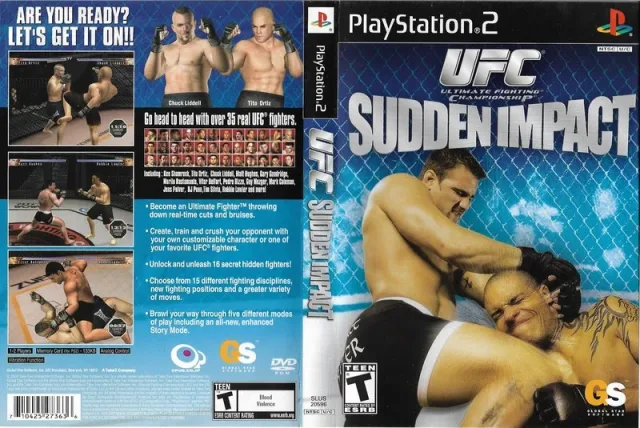
1.3GB UFC - Ultimate Fighting Championship - Sudden Impact
Fighting 2001

Most Dragon Ball games of the sixth generation were built around spectacle: beam struggles filling the screen, arenas the size of small countries, transformations cued to cutscenes. This one went the other way. Its arcade parent ran on Namco hardware in 2005, and the people behind it came out of Capcom's fighting game lineage, Noritaka Funamizu among them. What they made is a Dragon Ball fighter with a command list, close-range pressure, and a genuine interest in whether you can execute.
That shows up immediately in how matches feel. Fighters stay grounded and near each other far more than in the Budokai Tenkaichi mold, with throws, guard breaks and cancel routes that reward a player willing to sit in training mode. Ki still matters, and beam attacks still arrive with the expected noise, but they function as tools inside a neutral game rather than as the point of the fight. The camera hangs behind and to the side, chasing the action in a way that occasionally loses the plot when both characters take to the air.
The customization layer is the part people remember. Collecting Dragon Balls and skill items across the single-player modes lets you slot abilities onto individual characters, adjusting attack strength, ki recovery, or granting techniques they do not start with. It is a light system, closer to equipment than to a real build tree, but it gives the offline grind a reason to exist and encourages you to specialise a favourite instead of cycling through the roster.
The roster is where the compromise sits. Around eighteen fighters, drawn tightly from the core cast, with transformations handled as separate selectable forms rather than mid-match escalations. Anyone coming from the Tenkaichi games and their hundred-plus checklists will find it thin, and that mismatch of expectations is a large part of why the game landed quietly in 2006. It was also cheaper-looking than it needed to be, with plain stages and a presentation that never sold the pedigree of its combat.
Played now, it holds up better than its reputation, precisely because it refuses to be a licensed toy box. Two players who both understand the system get a real fighting game out of it, one where a whiffed heavy attack costs you the round. It is the rare Dragon Ball adaptation that treats the source material as a genre rather than a shopping list of characters, and it deserved a sequel that never came.
1.3GB  1.1GB
1.1GB  0.9GB
0.9GB 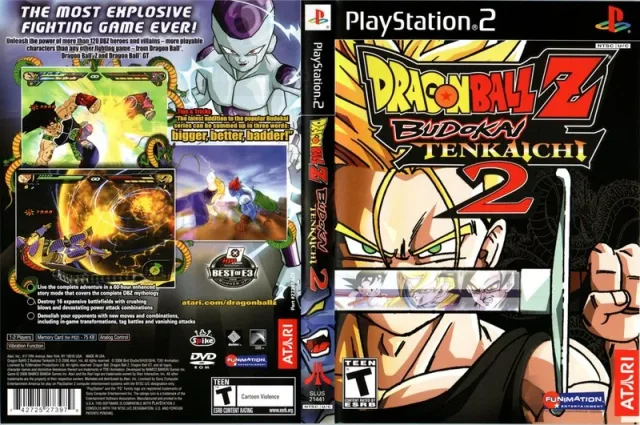 1.6GB
1.6GB  3.0GB
3.0GB  1.6GB
1.6GB  0.5GB
0.5GB  0.5GB
0.5GB loading comments…