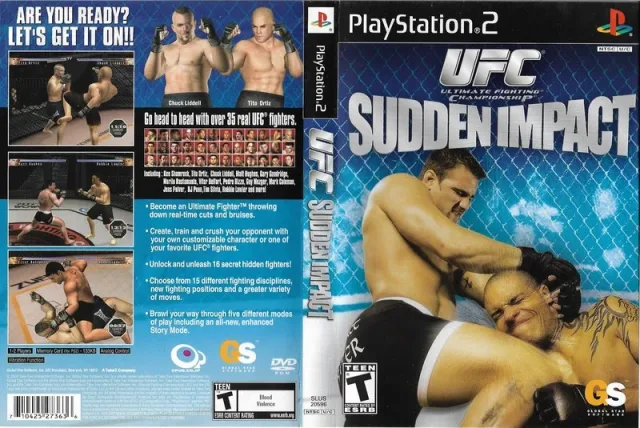
 1.3GB
1.3GB UFC - Ultimate Fighting Championship - Sudden Impact
Fighting 2001

Three versions shipped in 2003 and each one had a different visitor. The GameCube had Link, the Xbox had Spawn, and the PlayStation 2 got Heihachi Mishima, dragged in from Tekken with nothing but his fists against a cast armed with katanas, rapiers and a zweihander taller than he was. It should have been a joke character. Instead Namco built him a movelist of close-range knockdowns and a sidestep game that rewards anyone willing to live inside an opponent's guard, and he remains the strangest thing in a very polished fighting game.
What holds the whole thing together is the 8-way run, which by this point in the series had stopped being a novelty and become the grammar of every match. Movement is circular. You step off the axis to make a horizontal swing whiff, you punish with a vertical, and the other player steps off to avoid that in turn. Ring outs keep the pressure honest, because positioning is never neutral when the arena has edges. Guard Impact rewards reading a pattern rather than mashing out of it, and it stayed a skill ceiling rather than a crutch.
Weapon Master is the reason this version got played to death on single-player nights. It is a map-and-mission structure, a chain of fights with conditions attached, some of them petty and some genuinely nasty, paying out gold that buys new weapons for the cast. Those weapons carry real stat trade-offs, so the mode functions as an odd little RPG bolted to a fighting engine. It is repetitive past the halfway mark. It also unlocks enough that most players finished it anyway.
Visually it was one of the sixth generation's early showpieces, and the character models still read cleanly because Namco spent its polygon budget on silhouettes and cloth rather than surface noise. The arcade original ran on Namco System 246, essentially PS2 hardware, which is why the console conversion loses so little.
Series regulars will tell you the third game added more and the fourth added less, but the second is where the balance sat right. Everything a player does here is legible: the whiff, the step, the punish, the moment someone backs themselves onto a ledge. Twenty years on it is still the version people set up when two people want to settle something in eight rounds.
1.3GB 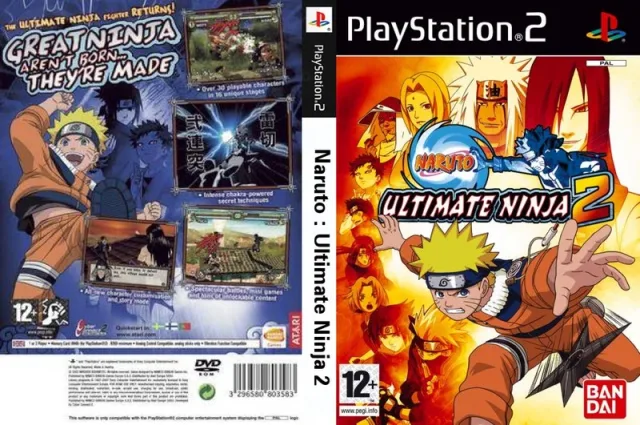 1.1GB
1.1GB 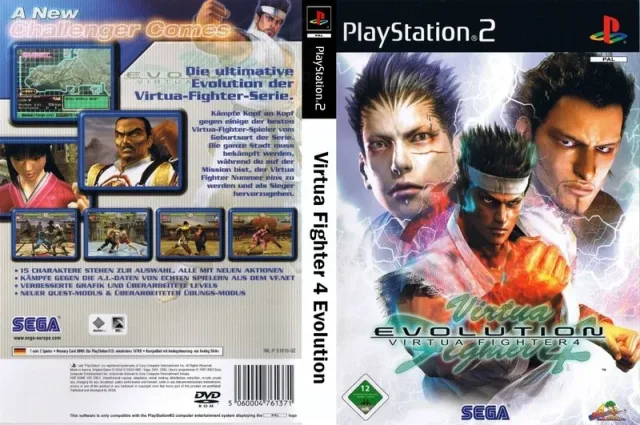 0.9GB
0.9GB 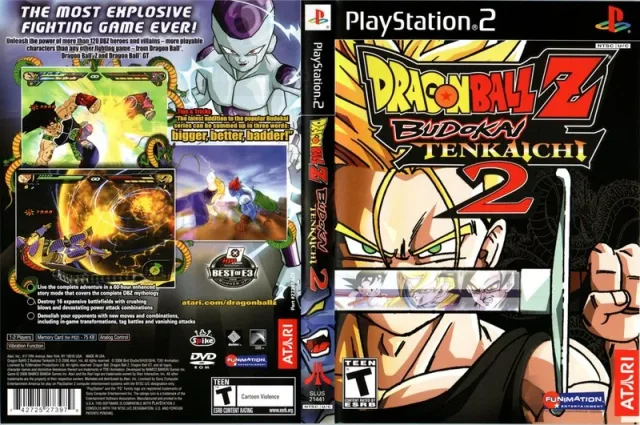 1.6GB
1.6GB  3.0GB
3.0GB  1.6GB
1.6GB  0.5GB
0.5GB  0.5GB
0.5GB loading comments…