 1.3GB
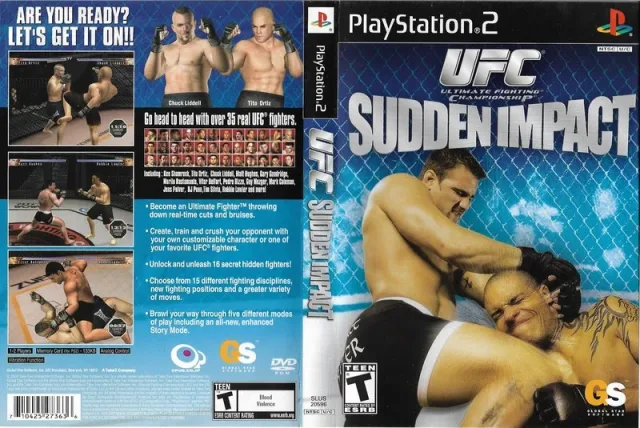
1.3GB UFC - Ultimate Fighting Championship - Sudden Impact
Fighting 2001

The camera sits behind your fighter's shoulder, and that single decision separates this game from everything Dimps had built under the Budokai name. Out goes the 2D plane with its clean side-on reads. In comes a full 3D arena where your opponent is a lock-on marker somewhere off screen, closing at speed, and where the fight is as much about orienting yourself as it is about landing hits. It took a genre that had settled into a comfortable rhythm and made it disorienting again, on purpose.
Spike built the combat around ki management rather than combo trees. Melee strings are short and simple, ending in a launcher that sends the other fighter skidding across the dirt or through a rock face. What matters is the meter underneath: whether you have the charge to teleport behind an incoming rush, to burst forward and cut off an escape, or to spend a Blast stock on a transformation or a screen-filling beam. The gap between a mashing player and a competent one is entirely in that resource economy, which is a smarter design than the button-heavy presentation suggests.
Dragon Adventure retells the Saiyan, Frieza, Cell and Buu arcs, with flight sections over a world map between fights where you scoop up capsules and items. The mode is thin as a narrative — cutscenes are functional at best, and the English dub work is uneven — but it does the one job a Dragon Ball game has to do, which is let you play the beats you already know from the other side. The roster clears sixty entries once you count the transformations counted separately, drawing on films and Dragon Ball GT as freely as the main series.
What has aged is the technical envelope. Arenas are large but sparsely dressed, the destruction is scripted rather than physical, and the frame rate strains in two-player split screen, which is exactly where the game is most fun. The lock-on also loses track of fast movement often enough to be a genuine irritation in close quarters. Its two sequels sanded most of this down and expanded the roster to absurd lengths, which is why the first Tenkaichi rarely gets picked up now.
It deserves better than that. This is the entry where the series worked out what a Dragon Ball fighting game should feel like from the inside of the fight rather than the side of it, and the rough edges are the marks of a studio solving the problem for the first time.
1.3GB  1.1GB
1.1GB  0.9GB
0.9GB 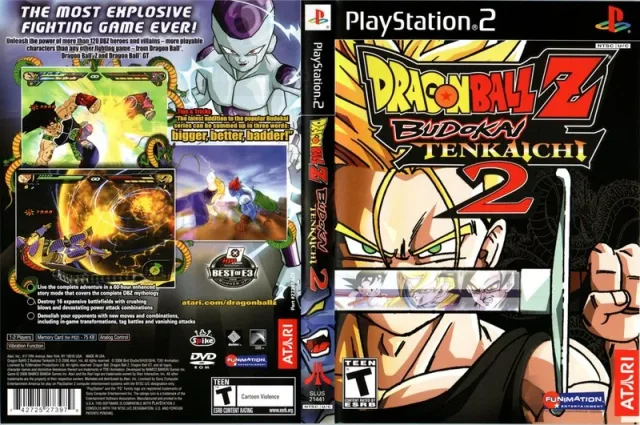 1.6GB
1.6GB  3.0GB
3.0GB  1.6GB
1.6GB 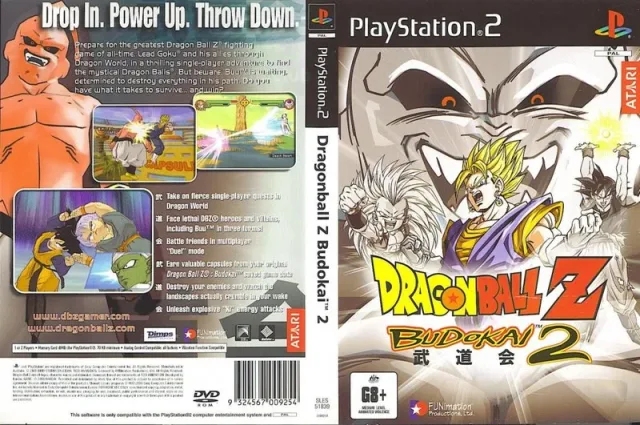 0.5GB
0.5GB  0.5GB
0.5GB loading comments…