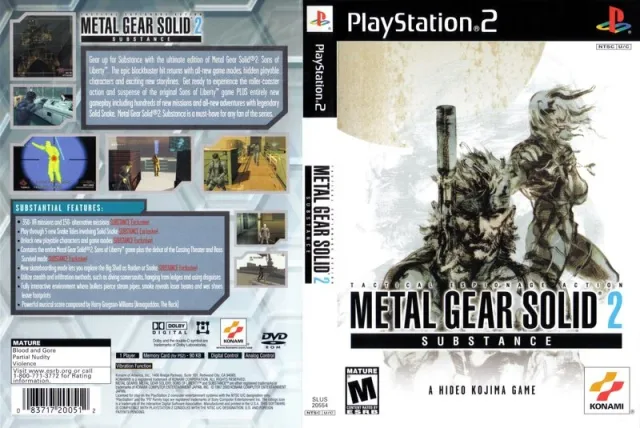
 4.1GB
4.1GB Metal Gear Solid 2 - Substance
Stealth 2002

Two games shipped in 2006 under this title, and the one that ran on PlayStation 2 was not a downscaled port. Ubisoft Shanghai built its own version on the Chaos Theory framework, with its own mission list, its own level geometry, and — crucially — the light meter that the next-generation build had thrown out. That single retained gauge tells you which lineage this version belongs to. It is the last of the old Splinter Cell design, patient and readable, rather than the first of the new one.
The premise is the interesting part. Sam Fisher goes deep cover inside John Brown's Army, a domestic terrorist cell, which means every mission carries two sets of objectives pulling against each other. The NSA wants intelligence intact and civilians alive; the JBA wants proof you are one of them. Satisfy one and the other's trust drops. The system is blunter than it sounds in summary — often it comes down to choosing which of two clearly labelled tasks to complete — but it does something the earlier games never attempted, which is make Sam's competence a liability. Being too good an agent gets you exposed.
The JBA headquarters works as a hub between field operations, and it is where the design bites hardest. You are given a window of a few minutes to pick a lock, photograph a document or plant a bug, while other members of the cell wander the same corridors and expect you to be somewhere else. No gadgets, no darkness to hide in, just timing and nerve. It is the closest the series came to a social stealth puzzle.
What holds up is the fundamentals, because they were already excellent by 2005: the deliberate movement, the shooting out of lights, the bodies dragged into unlit corners. What has aged less kindly is the pacing around the story. Cutscenes carry a lot of weight, the trust mechanic rarely surprises you twice, and the level structure is tighter and more corridor-bound than Chaos Theory's best work. Sarah's death, the event that sends Sam under, is handled quickly and never earns the weight the game asks of it.
Still, this is a considerable amount of stealth game for hardware that was seven years old at launch, and the Shanghai team clearly understood what the engine could still do. Play it as the quiet epilogue to the original trilogy rather than the start of something, and it makes sense.
4.1GB 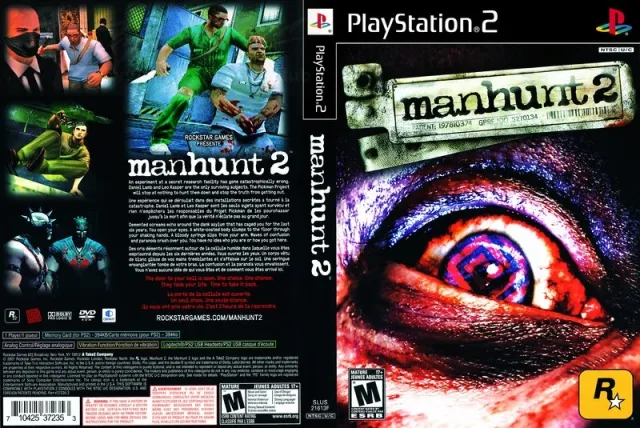 2.0GB
2.0GB 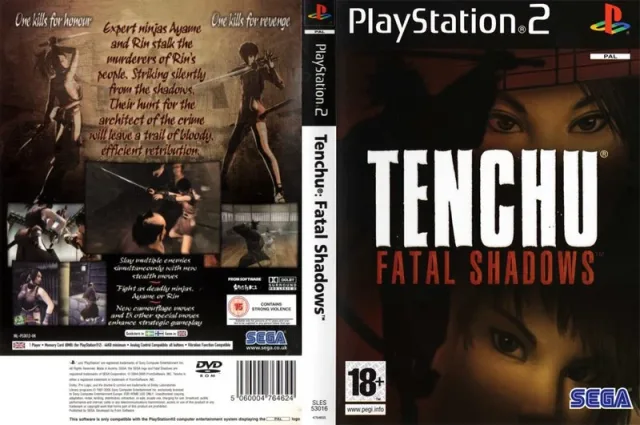 2.8GB
2.8GB  3.2GB
3.2GB  1.8GB
1.8GB  3.2GB
3.2GB  2.2GB
2.2GB  2.5GB
2.5GB loading comments…