 4.1GB
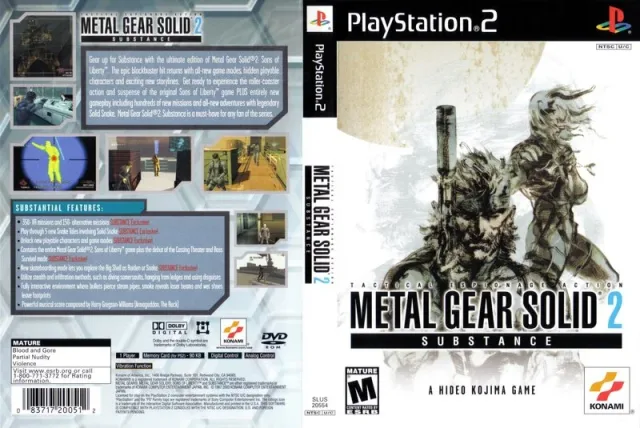
Metal Gear Solid 2 - Substance
Stealth 2002
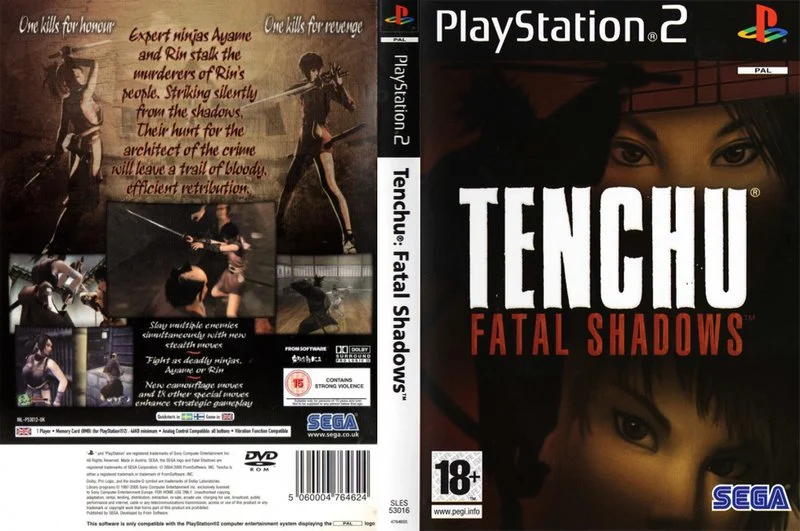
Rikimaru does not show up. For a series that had spent five years defining itself through the stoic white-haired shinobi, handing an entire game to Ayame and a brand-new character was either a statement of confidence or an admission that the formula needed a jolt. Rin, whose village is burned out from under her in the opening minutes, is the actual protagonist here, and her grief drives a plot that is simpler and meaner than the Azuma clan intrigue fans were used to.
The stealth loop remains the one From Software and K2 had been refining since the PlayStation original: creep along the edges of a walled compound, watch the ki meter climb as a guard closes in, wait for him to turn his back, then press the button that triggers a stealth kill animation. Those kills are still the whole reward structure. They are graded, they are scored at the end of each mission, and they are the reason you spend two minutes crouched behind a crate rather than drawing your sword in the open. Direct combat exists and is deliberately unsatisfying, which is the correct design choice even when it makes the boss fights feel like a different, worse game.
What Fatal Shadows does not do is push the technology. Levels are compact, textures are flat, and the camera will still shove itself into a wall at the exact moment a patrol route matters. Two playable ninja with slightly different reach and speed is the extent of the structural novelty, and the co-operative sections where Ayame and Rin operate on the same map are more scripted than they first appear. This arrived in 2005, when Splinter Cell and Metal Gear Solid 3 had already redrawn what console stealth could look like, and the comparison is not kind.
And yet the fundamentals hold up better than the presentation suggests. The grappling hook remains one of the best traversal tools of its generation, giving you vertical freedom that most stealth games of the time simply did not offer, and rooftops function as genuine strategic space rather than decoration. Missions are short enough to replay for a better rank, which is where the design actually lives.
It is a modest, unambitious sequel made for people who already liked Tenchu, and it knows it. Play it for the moment a guard walks under your perch, entirely unaware, and the game lets you decide how long to wait.
4.1GB  2.0GB
 3.2GB
 1.8GB
 3.2GB
 2.2GB
 2.5GB
 2.5GB
loading comments…