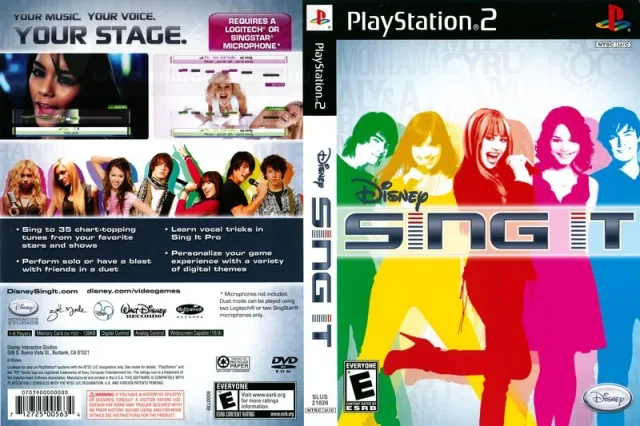
 1.9GB
Disney Sing It - Pop Hits
Rhythm 2008
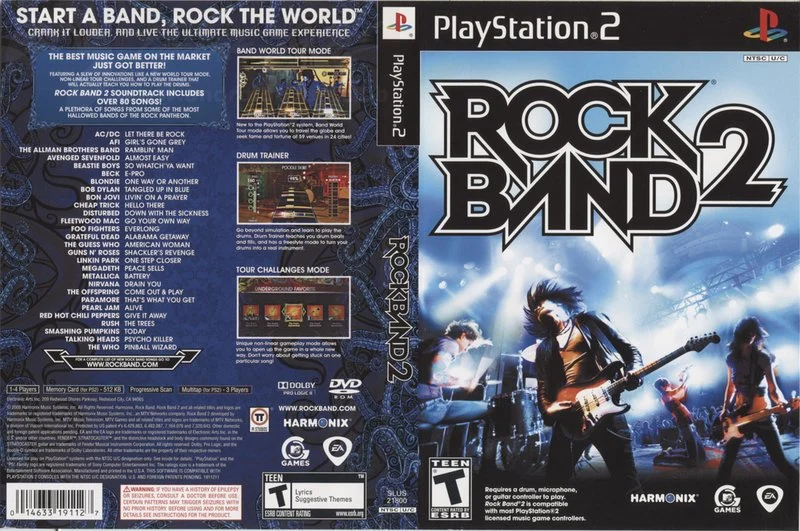
The most telling thing about the second Rock Band is how much of it is housekeeping. Harmonix had already proved that four people could sit in a living room with plastic guitars, a drum kit and a microphone and feel like a band. The sequel's job was to stop that illusion from fraying, and most of its changes are aimed at the awkward spots: the people who wanted to sit out a song, the singers who wanted to be taken seriously, the drummers who wanted the kit to hold up.
The core is unchanged. Notes scroll down lanes, you hit them in time, and the group's performance is tied together through a shared Overdrive meter and a crowd that can turn on you if one player fails. What the sequel added was flexibility. A struggling player can be rescued by a bandmate, and no-fail play lets a beginner sit in without ending the song for everyone. That sounds minor on paper. In a room with a mix of skill levels, it is the difference between a song finishing and an argument starting.
The setlist leans harder toward mainstream rock than the original's mix, with a broad run of classic and modern tracks, and the format rewards that breadth. Few other games of the period made the same sixth-generation arcade idea feel like a social event rather than a score chase. The Battle of the Bands, an online and challenge-driven mode, gave the tour structure a competitive edge, though on PlayStation 2 the platform's age limited how much of the wider ecosystem a player could reach compared with newer consoles.
It shows its age mostly in the hardware. Plastic instruments take space, the drum kit is loud, and the whole thing assumes that you own several peripherals and a few friends. Played solo, it is a competent rhythm game. Played with three other people and a bad singer, it is something better, a small and silly piece of theater.
That is what has lasted. The charts and menus are fine, but the lasting appeal is the memory of someone nailing a bridge they had failed ten times before, while the rest of the room cheered them on.
1.9GB 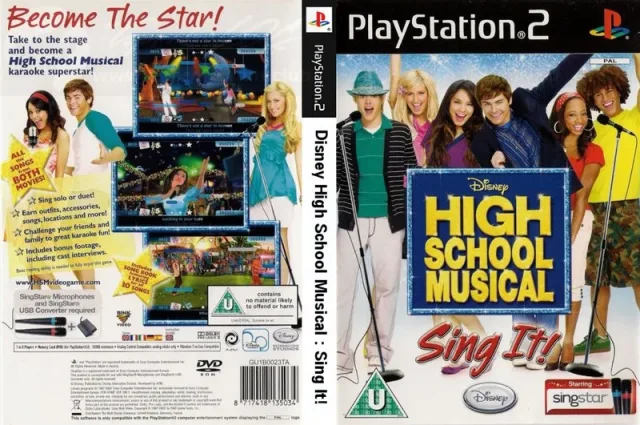 1.6GB
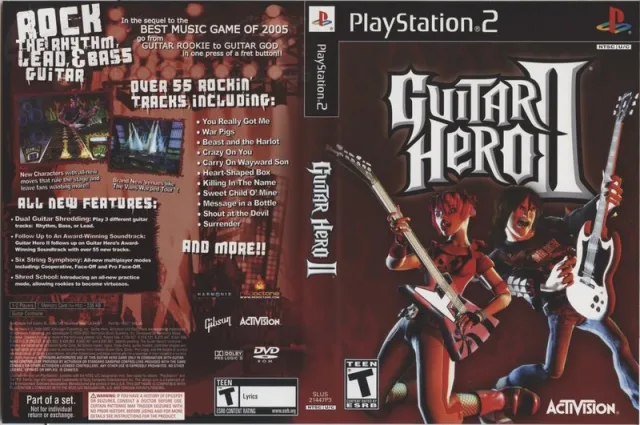 3.1GB
 4.8GB
 0.7GB
 1.4GB
 4.2GB
 2.5GB
loading comments…