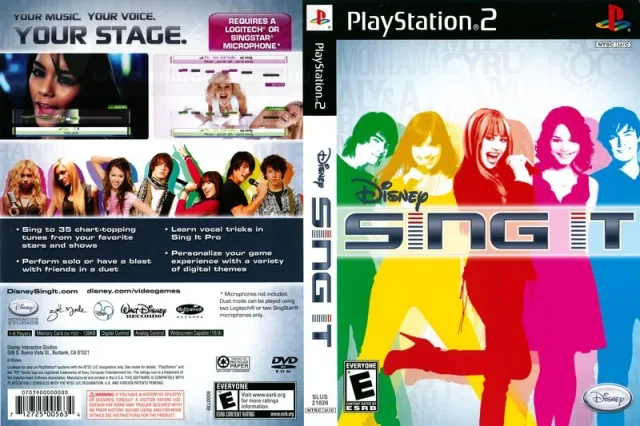
 1.9GB
Disney Sing It - Pop Hits
Rhythm 2008
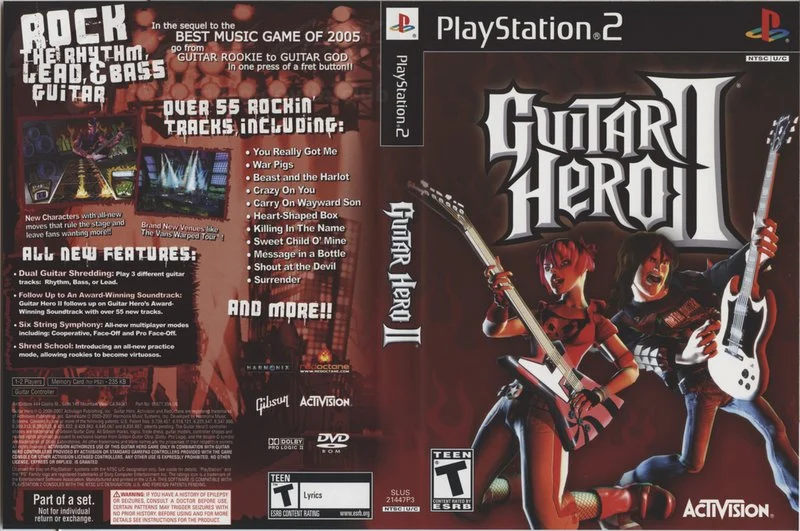
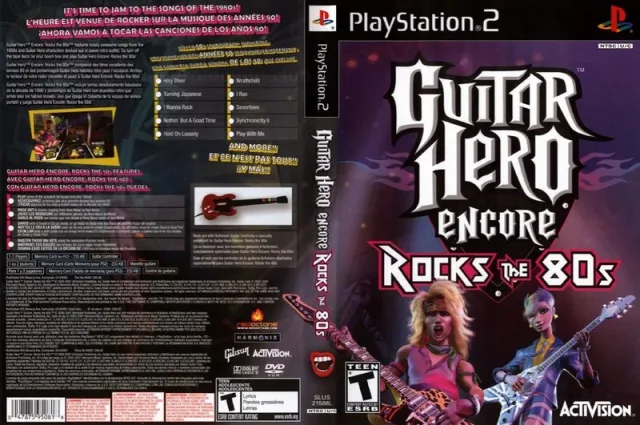
The big structural change in Harmonix's second plastic-guitar outing wasn't the setlist, it was the second guitar. Co-op career gave the first player lead and the second a genuine bass or rhythm chart, written rather than copy-pasted, so two people could sit through a run of 64 songs and both have something to do. That sounds modest now. In 2006 it turned a solo party trick into a thing households organised evenings around.
The note charting is where the sequel earned its reputation. The first game's hammer-on and pull-off detection was fussy enough that many players simply strummed everything; here the window was widened and the fast passages were written assuming you would use it, which changes the physical feel of playing fast runs entirely. Practice mode arrived too, letting you isolate a section and drop the tempo until your fingers caught up. Unglamorous, essential, and the reason a lot of people cleared solos they had written off.
The songs were mostly covers, recorded by session musicians, and that is the part that has aged most visibly against the master-track era that followed. The selection holds up better than the recordings do. Avenged Sevenfold, Stone Temple Pilots, Rush's YYZ sitting near the end of the career like a wall, and Freebird as an endurance test in the closing tier. The bonus tier of unsigned bands, including Harmonix staff material, gave the game a scrappiness the later corporate entries never recovered.
It also works fine with a controller, though almost nobody played it that way. The PS2 release predates the Xbox 360 version by several months and is the one that defined the game, right down to the red SG-shaped guitar it shipped with. Hardware is the catch today: the peripheral is the game, and surviving controllers are a lottery of worn strum bars and dead whammy bars.
What keeps it worth returning to is how tightly the difficulty curve is cut. Each tier teaches a specific motor skill before the next one demands it, and Expert never feels like it is cheating you with charts no hand could play. Plenty of rhythm games since have had better audio, more songs and more instruments. Few have been this well taught.
1.9GB  1.6GB
 4.8GB
 0.7GB
 1.4GB
 4.2GB
 2.5GB
 2.7GB
loading comments…