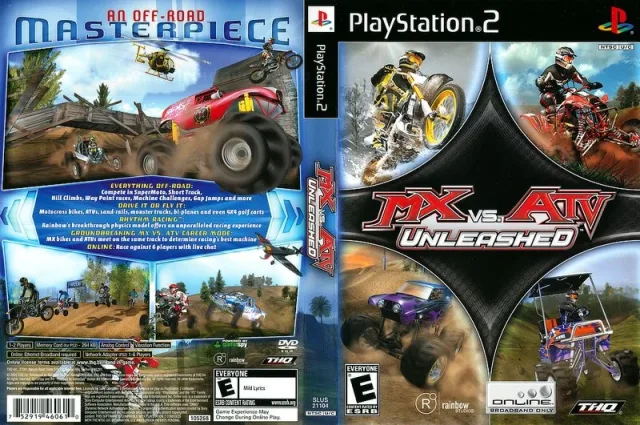
 1.1GB
1.1GB MX vs. ATV Unleashed
Racing 2005

Guardrails are the whole argument here. On the narrow mountain passes Genki modelled for this one, there is no runoff and no forgiving grass verge, just a strip of steel and a drop, and the scoring system keeps asking you to lean on that fact. Hold the car sideways closer to the barrier, for longer, and the points climb. Straighten up early and you have effectively lost the run before the next hairpin.
It arrived in North America in 2007 under the Tokyo Xtreme Racer banner, but the DNA is Kaido Battle, Genki's downhill offshoot of its own highway series. That matters, because the rivals work the same way they did on the Wangan: named drivers with portraits and attitude, roaming the passes, waiting to be flashed and challenged. Beat one and you take a badge or a piece of their reputation. The structure is closer to a wandering RPG than to a championship ladder, and it gives the mountain a social texture that most drift games of the period never bothered with.
The handling sits in an awkward but interesting middle. It is not a simulation, and anyone coming from later drift-focused titles will find the transitions blunt and the weight transfer more suggested than felt. Still, the cars respond to what you do with the throttle rather than snapping to a scripted angle, and setting up gearing, suspension and tyres genuinely changes how a run feels. Learning a pass here is real work. Blind crests, off-camber exits and the constant knowledge that the barrier is unforgiving make the second lap of any road much better than the first.
Presentation is where the years show. The Japanese night is mostly darkness and headlight cones, textures are plain even by 2006 standards, and the framerate can wobble on the busier descents. The licensed car list leans heavily on the usual Japanese rear-drive staples, and the customisation, though deep in menus, does not do much visually. Sound is thin. The music is exactly the kind of anonymous rock and eurobeat pastiche the genre insisted on at the time.
What survives is the specificity. This is a game about a small number of roads learned intimately, about rivals you meet again and again on the same corner, about a scoring system that rewards nerve over neatness. Modern drift games are prettier and more precise, but few of them make a mountain feel like a place with residents. Go back for the passes, and stay for the people who will not let you leave until you have beaten them.
1.1GB  1.4GB
1.4GB  1.8GB
1.8GB  0.1GB
0.1GB  2.0GB
2.0GB  0.1GB
0.1GB  0.3GB
0.3GB  1.0GB
1.0GB loading comments…