 1.1GB
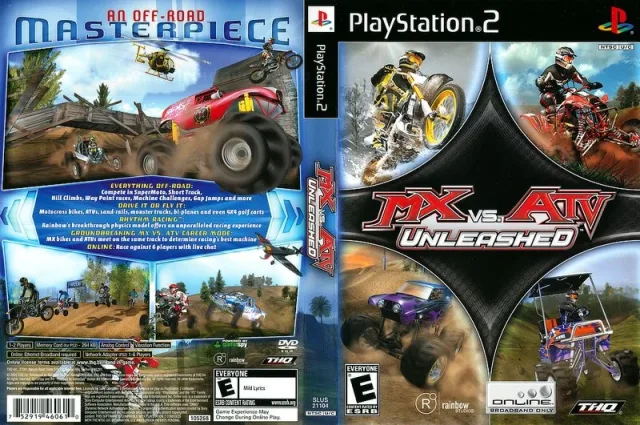
1.1GB MX vs. ATV Unleashed
Racing 2005

Bayview at night is one long wet reflection, and the reason it matters is that you have to drive through it. Instead of picking a race from a list, you steer to the marker yourself, past body shops you cannot afford yet, past the specialty stores locked behind a reputation number you have not hit. It is a small structural decision with a big effect: the city stops being a backdrop and becomes the connective tissue of the whole game.
That free-roam layer arrived in 2004, when EA Black Box was riding the tuner boom for everything it had. The first Underground had nailed the neon-and-nitrous look but kept everything menu-driven. The sequel opened it up, added a map with five districts, and handed you a phone that buzzes with directions from Rachel between events. Some of that framing has aged into pure period kitsch. The driving has not. Grip is generous, nitrous is plentiful, and the sense of speed still comes mostly from motion blur and the wet sheen on the asphalt rather than from any real physical modelling.
Customisation is where the game commits hardest. Hoods, spoilers, split kits, widebody panels, neon underglow, hydraulics, trunk audio you will never hear from the driver's seat — the parts list is absurd and it knows it. Crucially, visual mods feed a reputation score that unlocks magazine and DVD cover appearances, which in turn unlock more parts. The game asks you to build a car that photographs well, then rewards you for it. Very few racers before this treated aesthetics as a progression currency.
The event roster spreads wider than it needs to. Circuit and sprint races are the backbone, drift is scored on angle and speed, drag reduces everything to shifting and lane discipline, and Street X puts you on tight technical loops. Outrun challenges let you flag down any AI car in the city for a quick duel. Some modes feel thin, and the sheer volume of driving between events is the main thing modern players complain about.
Still, the trade holds up. Underground 2 understood that a street racing game is partly about cruising with nowhere to be, headlights sliding across a parking garage wall while you decide which shop to visit next.
1.1GB  1.4GB
1.4GB  1.8GB
1.8GB  0.1GB
0.1GB  2.0GB
2.0GB  0.1GB
0.1GB  0.3GB
0.3GB  1.0GB
1.0GB loading comments…