 1.1GB
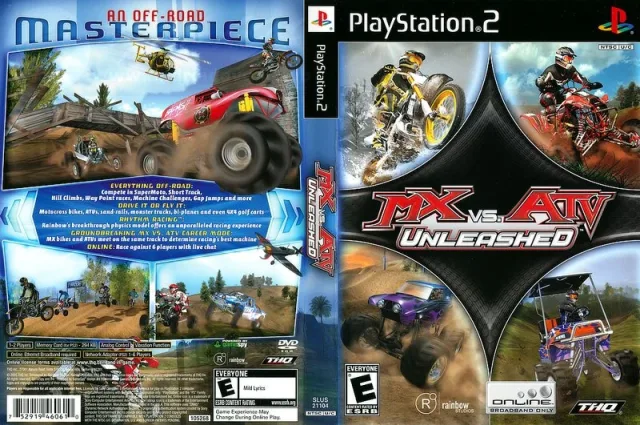
MX vs. ATV Unleashed
Racing 2005

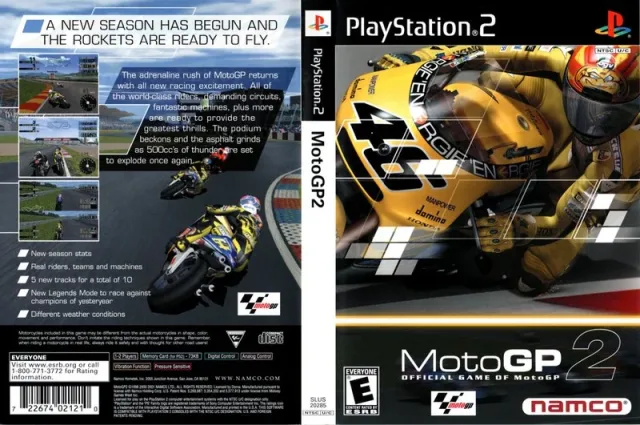
Grand Prix bikes had just swapped two-stroke 500s for 990cc four-strokes when Namco built this one, and the change is written into how the thing rides. There is more torque than the rear tyre can honestly use out of a slow corner, so the game becomes a negotiation with the throttle hand rather than a test of braking points alone. Get greedy at the apex and the back steps out. Sometimes you catch it. Sometimes it flicks you over the high side and the field disappears up the road while you watch a rag-doll animation you had every chance to avoid.
That balance is what separated Namco's PS2 line from the simulation-first bike games of the period. It is not a physics dissertation, and it does not pretend to be. Lean angle is generous, the bike wants to turn, and the frame rate stays high enough that you can read a slide before it becomes a crash. What it refuses to do is let you ride at pace on the brakes and the racing line alone; corner exit is where laps are won and where the game keeps taking them back.
The presentation carries the same restraint. Circuits are recognisable rather than photographic, the crowd and trackside detail are functional, and the camera sits close enough behind the rider that you feel the bike squat under acceleration. Riding solo against the AI for a season is the core of it, with time attack and shorter challenge events filling out the edges. Nothing here is trying to be a career drama.
What holds up is the sensation of speed and the honesty of the handling model, which still teaches the same lesson it did two decades ago. What has dated is everything around it: thin menus, sparse commentary on your progress, a rider roster frozen to one season. Play it for twenty laps of Mugello and it makes its case without a word.
1.1GB  1.4GB
 1.8GB
 0.1GB
 2.0GB
 0.1GB
 0.3GB
 1.0GB
loading comments…