 1.1GB
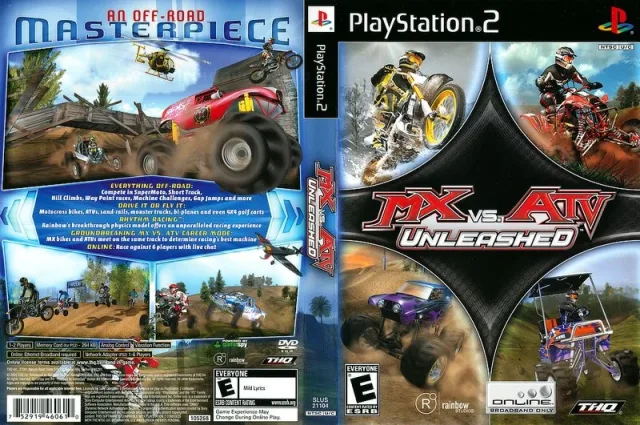
1.1GB MX vs. ATV Unleashed
Racing 2005

The tyre stacks, the hoardings, the wooden fences lining every corner: in most racing games of 2004 they were painted scenery. Bugbear made them ammunition. Every object you flatten in FlatOut breaks apart, stays broken, and drops a little nitrous into your meter, which means the racing line and the destruction line are constantly at odds. Take the clean route and you arrive at the straight with an empty boost. Plough through the barn and you arrive dented but loaded.
The physics are the reason it still holds up. This is a Finnish studio that had already done rally work, and the cars carry real weight through mud, gravel and water without ever tipping into simulation. Panels crumple, wheels buckle, suspension sags on one side, and the handling degrades with the damage. A twelve-car pack hitting the first corner of a figure-eight dirt track produces a genuine pile-up rather than a scripted one, and the wreckage sits there for the next lap.
Then there is the driver. Hit something hard enough at the wrong angle and he leaves through the windscreen, limbs flailing, to skid across the tarmac while your car rolls on without him. It could have been a one-note gag. Instead the game builds side events around it, launching the poor man at dartboards and over high-jump bars, scored on distance and landing. Absurd, and the ragdoll is good enough to make it funny twenty times over.
Structurally it is lean. Three car classes, a career of championships that pays out cash for upgrades and repairs, derby arenas, and split-screen for a second player. There is not much padding, which is a fair trade for a game whose ambitions were mechanical rather than cinematic. The upgrade path is thin by later standards and the AI can be aggressive to the point of unfairness on the tighter circuits.
What the sequels gained in polish and licensed soundtracks they slowly lost in this version's grubby, agricultural feel. The tracks look like real places somebody neglected. Crashing here is not a punishment or a spectacle so much as an event with consequences you carry to the finish line, and that is rarer than it sounds.
1.1GB  1.4GB
1.4GB  1.8GB
1.8GB  0.1GB
0.1GB  2.0GB
2.0GB  0.1GB
0.1GB  0.3GB
0.3GB  1.0GB
1.0GB loading comments…