 1.1GB
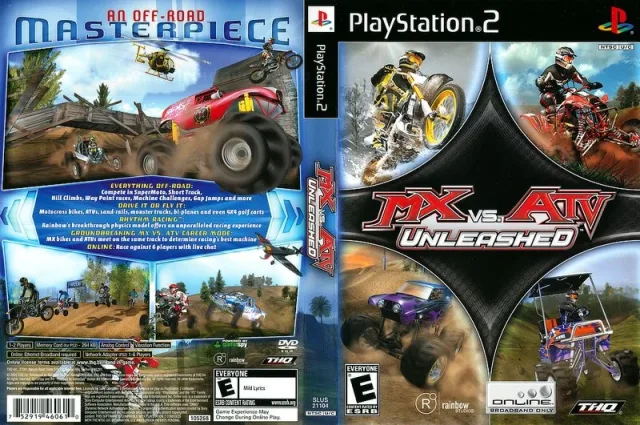
1.1GB MX vs. ATV Unleashed
Racing 2005

A translucent sphere sits in the corner of the screen, tilting and sloshing as you turn in. That is the Visual Gravity System, and it is the clearest statement of intent any PS2 racer ever made: Konami wanted you thinking about weight transfer, not lap counters. Once you learn to read it, the thing becomes strangely hard to drive without.
Arriving in 2005 into a market where Gran Turismo defined what a console driving simulator was supposed to be, this one refused to compete on the terms everyone expected. There is no garage economy built on prize money and grinding. Cars change hands through wins and through a slot machine, which sounds flippant and mostly is, but it means the collection grows sideways rather than as a shopping list. The real spine is the Enthu Points system, a driver rating that rises with clean, controlled laps and bleeds away when you lean on driving aids or trade paint. You can cross the line first and still finish worse off than you started. Few racing games have been so willing to tell a player they were fast and wrong at the same time.
The physics justify the attitude. Grip loss is progressive rather than binary, surfaces behave differently under load, and the handling model rewards small inputs in a way that felt closer to the PC simulation crowd than to anything else on the console. With a wheel it is genuinely excellent. With a pad it is demanding to the point of hostility, and that reputation stuck. Reviewers at the time respected it more than they enjoyed it, and it never found the audience its engineering deserved.
Age has been kind in an unexpected way. The presentation was always sober — clean menus, restrained car list, tracks that favour technical layouts over spectacle — so there is little dated flash to wince at now. What remains is a driving model that still teaches you something, and a scoring philosophy that reads today like an argument about what racing games measure. Most of them measure position. This one measured control.
It is not a soft landing, and anyone arriving expecting the reassuring rhythm of a career mode with a wallet attached will bounce off it within an hour. Give it a wheel and a week, though, and the sphere in the corner starts doing the work your eyes used to do. That is a rare thing for a licensed racer to pull off, and rarer still for one that was written off as the other car game of 2005.
1.1GB  1.4GB
1.4GB  1.8GB
1.8GB  0.1GB
0.1GB  2.0GB
2.0GB  0.1GB
0.1GB  0.3GB
0.3GB  1.0GB
1.0GB loading comments…