 2.5GB
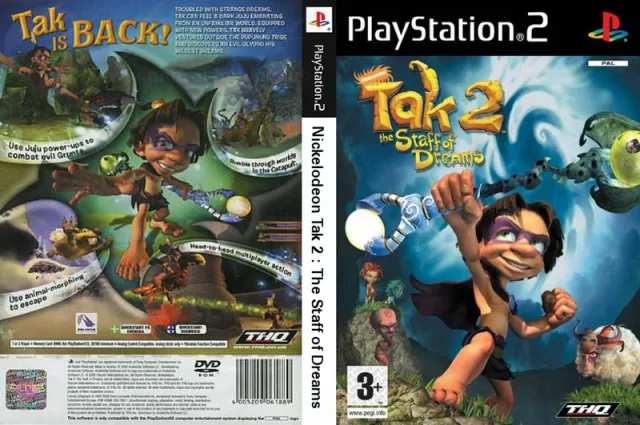
2.5GB Nickelodeon Tak 2 - The Staff of Dreams
Platformer 2004

Dark gems are the best idea in this one. They sit half-buried in the scenery, leaking corruption into whatever level they occupy, and smashing one visibly heals the ground around it — bridges reassemble, plants come back, the palette warms up. It gives a collectathon something a collectathon rarely has: a reason to care where the thing you just picked up used to be. The rest of Spyro's 2004 outing is more conventional, but that single system tells you what Eurocom was trying to do, which was make the world feel like it was reacting to you rather than just handing out counters.
The context matters. The previous console entry, Enter the Dragonfly, had shipped in a state that the series never really lived down — frame rate collapses, loading pauses, bugs that reached the shelf. A Hero's Tail is the apology. It runs, the camera behaves, the collision holds up, and the charge-and-glide moveset is close enough to the Insomniac originals that muscle memory transfers. Competence as a design goal is not glamorous. After the previous game it was the right call.
Spyro learns fire, electric, water and ice breath, and the levels are gated accordingly: coloured barriers, elemental switches, chests that only crack to the right element. That means going back, repeatedly, to areas you cleared hours ago. It is a light Metroid structure grafted onto a hub-and-spoke platformer, and it works better in the Dragon Village and Coastal Remains than it does in the later zones, where the return trips start to feel like homework. Sparx handles top-down shooting interludes, Hunter takes the ranged sections, and Blink the mole gets bomb-throwing tunnels — variety that breaks the pace up without any of the alternates being as good to control as the dragon.
Red, the fallen elder behind the gems, is voiced by Gary Oldman, which is the kind of casting the licensed-adjacent mascot market threw money at in 2004 and rarely used well. He is fine. The writing around him is aimed squarely at children and lands there, without the sly edge the first trilogy had.
What remains is a tidy, unambitious platformer that knows exactly which series it belongs to and never risks embarrassing it. It closed the classic Spyro line before The Legend of Spyro rebooted everything into darker fantasy, and as endings go it is a quiet one — a dragon flying home over ground he personally scrubbed clean.
2.5GB  2.9GB
2.9GB  0.7GB
0.7GB  1.9GB
1.9GB  1.7GB
1.7GB  0.2GB
0.2GB  0.8GB
0.8GB  1.3GB
1.3GB loading comments…