 0.3GB
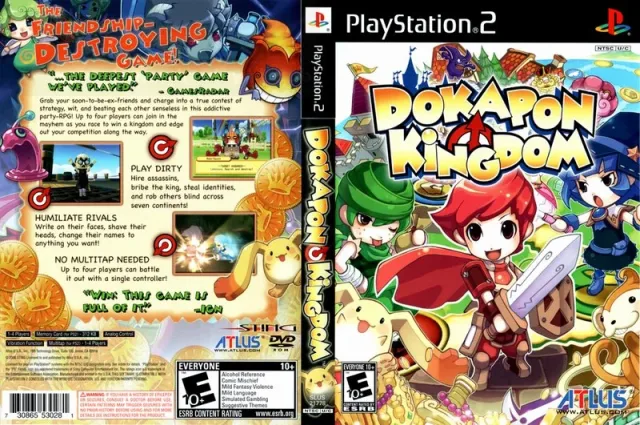
0.3GB Dokapon Kingdom
Party 2008

Everything about this collection was designed for a controller the PS2 does not have. The rabbids arrived in 2006 as the loudest possible advertisement for waggle, a launch-window showcase built on shaking, aiming and yanking a Wii remote, and the version that landed on Sony's ageing box had to translate all of that into sticks, shoulder buttons and a lot of rhythmic hammering. That translation is the whole story of this port.
The framing is still one of Ubisoft's better bad ideas. Rayman is captured by an army of screaming, plunger-obsessed rabbits and shoved into an arena to perform for them, working through a calendar of trial days and earning plungers to decorate his cell and eventually tunnel out. Between rounds he stands in a cage while the crowd howls. The mood sits somewhere between a talent show and a prison sentence, and the game knows it, which is why the presentation leans so hard on the rabbids' one joke: the scream. It lands more often than a joke that simple has any right to.
The events themselves are short, blunt and wildly uneven. Racing warthogs, herding cows into a throw, a cow-tossing contest scored on distance, and the rail-shooter stretches where you clear waves of rabbids with a plunger gun. Those shooting galleries survive the move best, because a thumbstick crosshair is simply a different kind of good rather than a lesser one. The dance sequences, timed to shonky covers of pop standards, become straightforward button prompts and lose the physical comedy that made them work in the first place. Others reduce to endurance mashing.
As a couch game it holds up in short bursts, especially with a second player trading turns for scores, and the difficulty curve is generous enough that nobody gets shut out. As a solo campaign it thins fast, because the story mode repeats the same trials with tighter targets and asks you to grind them again for unlocks. Fifteen minutes is the sweet spot.
What remains is a curious artefact: a party game that was a hardware demonstration first and a design second, stripped of the hardware and left to stand on its own material. Some of it is genuinely funny. Most of it is a reminder that a scream only carries so far without the flailing arms attached to it.
0.3GB  1.3GB
1.3GB  2.5GB
2.5GB  7.6GB
7.6GB  1.1GB
1.1GB  1.1GB
1.1GB  1.5GB
1.5GB  1.4GB
1.4GB loading comments…