 2.3GB
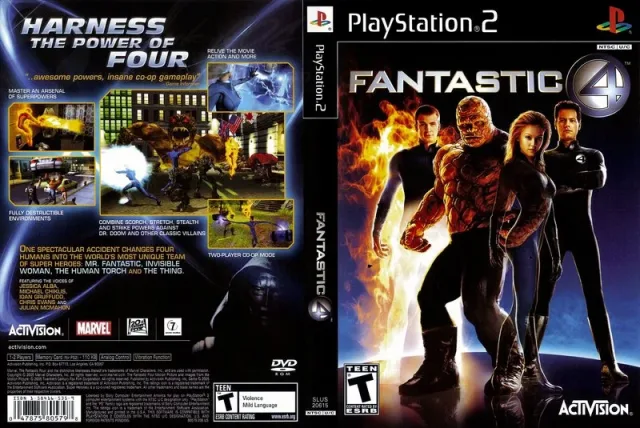
2.3GB Fantastic 4
Beat 'em Up 2005

Slow motion in most games is a reward, a moment of spectacle handed to you after you've already won the fight. Here it's a resource you spend, and spending it badly gets you killed. Hold the slow button and Joe's punches gain enough weight to break a guard, but the enemies get their own openings in the same stretched second, and your VFX meter drains the whole time. Run it dry and the costume vanishes, leaving a scrawny film geek in a beat 'em up he has no business being in.
Hideki Kamiya's 2003 design, built at Capcom's Production Studio 4 and ported to PlayStation 2 the following year, looked like a throwback and played like nothing else on the shelf. It scrolls sideways on a 2D plane rendered in hard-edged cel shading, with speed lines and comic-panel flourishes borrowed from tokusatsu television. The joke of the setting — Joe dragged into Movieland to rescue his girlfriend from a B-movie villain — is thin on purpose. What matters is that three powers, Slow, Mach Speed and Zoom In, each solve combat and traversal problems the others can't touch, and the game refuses to let you coast on one.
Enemies telegraph attacks you're expected to dodge by simply tilting the stick, which sounds trivial until the screen fills and every dodge has to be paid for with meter. Bosses are long, patterned and genuinely mean; Hulk Davidson's axe and Gran Bruce's jaws exist to teach specific lessons about which power you should have been holding. Scoring rewards style and punishes flailing, and the difficulty tiers above the default are not a formality. This is a hard game that expects a second and third clear.
The PS2 conversion arrived after the GameCube original and added Alastor as an alternate fighter, along with tuning that made the package the fuller one. It also had to work harder to keep the frame rate steady when the screen crowded up, and it mostly does. Some of the Six Machine shooting stages still feel like padding between the real fights.
Two decades on, the cel shading has aged far better than the polygonal realism it was competing against, and the combat holds because it was never about spectacle in the first place. Every flashy thing on screen is something you paid for out of a meter. That's a rare kind of honesty in an action game.
2.3GB  0.9GB
0.9GB 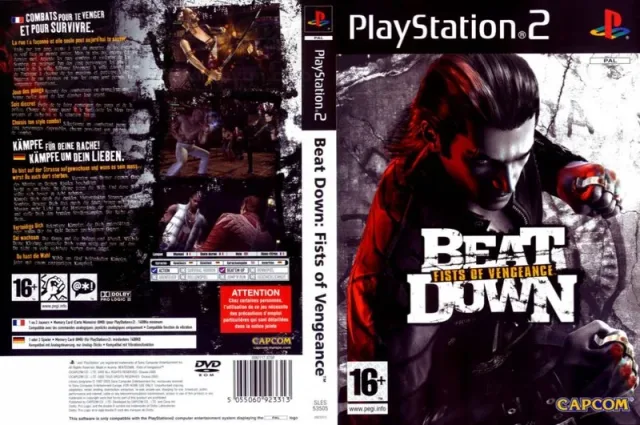 2.0GB
2.0GB  1.0GB
1.0GB  2.1GB
2.1GB  1.6GB
1.6GB  2.0GB
2.0GB  5.6GB
5.6GB loading comments…