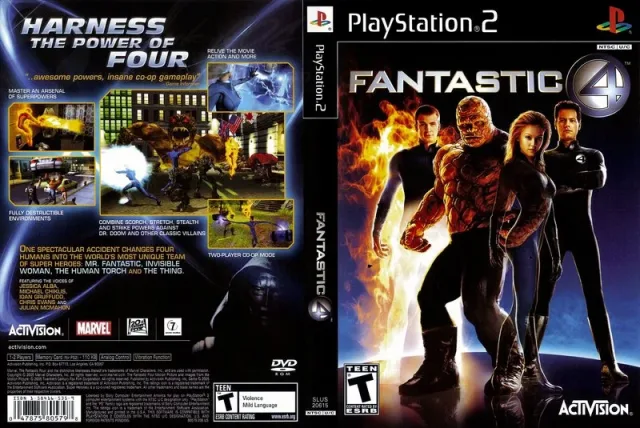
 2.3GB
2.3GB Fantastic 4
Beat 'em Up 2005

The first game shipped in the West with Michael Madsen reading Kiryu's lines and a marketing push that tried to sell Kamurocho as GTA with tattoos. The sequel arrived in 2008 with no dub at all, Japanese audio and subtitles only, two years behind its Japanese release and months into the PS3's stride. That decision reads now as an admission: Sega had stopped trying to translate this thing for a mass audience and started making it for whoever was still paying attention. It is the better game for it.
What the sequel actually adds is a second city. Sotenbori, standing in for Osaka's Dotonbori, sits across a canal from a stretch of neon storefronts, and moving between it and Kamurocho gives the story a geography that the first game never had. Ryuji Goda, the Dragon of Kansai, is the reason for the trip, and he is one of the few antagonists in the series whose threat is legible from the first scene he appears in. Kiryu spends the game escorting a detective, Kaoru Sayama, through a Tojo Clan succession crisis that keeps folding back into a decades-old massacre. The plotting is soap opera pitched at operatic volume, and it commits hard enough that the melodrama lands.
Combat is where the sequel does its quiet engineering work. Heat actions multiplied and got situational: bicycles, signboards, traffic cones, a wall behind an enemy's head. Weapons degrade and break rather than lasting forever. Fights now spill indoors instead of stopping at doorways. It is still a brawler built on a small move set and a lot of interruptible animation, and the camera in tight alleys remains an argument you will lose, but the feedback loop of grabbing something off the street and finishing a thug with it is the thing the series would refine for the next fifteen years without fundamentally improving.
Around that sits the substructure people came to love later: hostess conversations, batting cages, mahjong, a completion list that tracks everything you have not bothered to do. On the PS2 it runs on visible seams, with loading screens between districts and character models that were behind the curve even in 2006. None of that dulls the effect of finishing a chapter, stepping outside, and getting sidetracked by a UFO catcher for forty minutes.
This is the entry where the template locked into place, and it did so on hardware already being packed away.
2.3GB  0.9GB
0.9GB  2.0GB
2.0GB  1.0GB
1.0GB  2.1GB
2.1GB  1.6GB
1.6GB  2.0GB
2.0GB  1.1GB
1.1GB loading comments…