 2.3GB
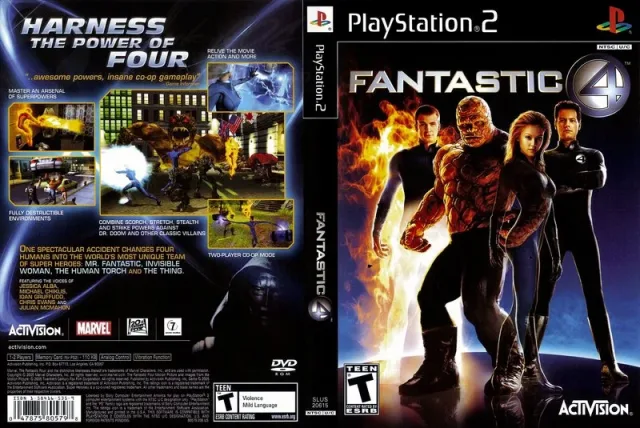
2.3GB Fantastic 4
Beat 'em Up 2005

Every Roman legionary in this thing is essentially a physics toy. Punch one and he cartwheels into three of his mates, helmets pop loose, and the helmets are the currency you spend on new moves. That loop — hit a Roman, harvest the hardware, buy a bigger hit — is the whole design in miniature, and it is a smarter reading of the source material than most licensed games manage. Goscinny and Uderzo built forty years of comics on the joke of tidy legions being scattered like skittles, and Étranges Libellules found the mechanical version of the joke.
Released in Europe as Asterix & Obelix XXL and given the groan-worthy Kick Buttix title for North America in 2004, it is a linear action-platformer split across Gaul, Normandy, Helvetia, Greece, Egypt and Rome, each with its own visual gag budget. You control Asterix, with Obelix along as a heavier, slower alternative you swap to for the jobs that need shoulders rather than speed. The combat has a genuine combo counter and a shop where earned helmets buy throws, ground pounds and area attacks, so the moveset you finish with is noticeably richer than the one you start with. Arena fights gate progress, platforming links them, and the pacing rarely lets either dominate for long.
The presentation is the strongest thing here. Cel-shaded characters that actually resemble Uderzo's linework, bright chunky environments, animation with real comic-strip snap to the impacts. On a console that spent 2004 chasing grit, a game this unashamedly cartoonish stood out, and it still reads cleanly now in a way many of its contemporaries do not.
What has aged less kindly is the repetition. Roman variety is thin, the encounter design leans on the same closed-arena template far too often, and the camera has a habit of drifting behind scenery during the busier scraps. There is no real difficulty curve so much as a gradual increase in how many bodies are on screen. Play it in half-hour sittings and the rhythm holds; play it in long stretches and you will feel the seams.
It sits comfortably in the Rayman and Jak lineage without ever threatening either, which is a fair place for a comics adaptation to land. The sequel sharpened the ideas, but this is where the studio proved the concept worked. Sometimes the pleasure of a game is just watching a well-drilled formation come apart.
2.3GB  0.9GB
0.9GB  2.0GB
2.0GB  1.0GB
1.0GB  2.1GB
2.1GB  1.6GB
1.6GB  2.0GB
2.0GB  5.6GB
5.6GB loading comments…