 1.1GB
MX vs. ATV Unleashed
Racing 2005
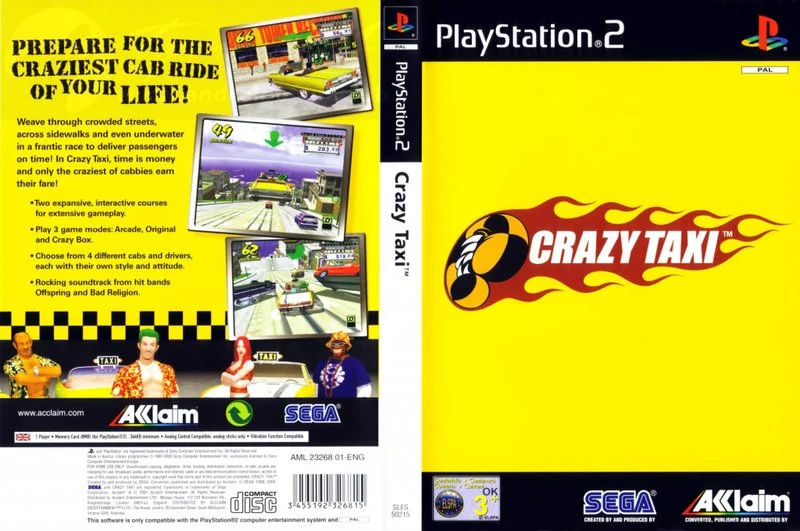
The most revealing thing about this game is the little arrow floating above a waiting customer, and the colour of the ring around them. Green means a short hop, yellow a middling one, red a long haul. Before you have touched a pedal you are already doing arithmetic: how much time is left, how far is that fare, and can a lazy short ride keep the clock alive long enough to matter.
That clock is the whole design. You start with a few seconds, and each delivery adds more, with the fare itself depending on how fast you get there. Tips come from the stuff a driving instructor would flinch at: close shaves with traffic, jumps off hills, drifts around corners. So the game pays you to drive badly, and then punishes you for driving too badly to reach the destination. Sega built a tidy contradiction and let it carry the entire thing.
The Dreamcast original came out of the arcade, and the PS2 version arrived as that pipeline's afterthought. It keeps the sunny California-style city, the pop-punk soundtrack of licensed tracks, and the customers who shout abuse when you miss a turn. The reverse is part of the charm: the drivers are ordinary people with names and a rough attitude, and the city's streets are a playground of ramps and rooftops to exploit. Learning the shortcuts is where the skill lives. The Crazy Dash, a hop launched by quickly shifting gears, is the technique that separates tourists from regulars.
What has aged is the content, not the feel. The map is small, the pedestrians pop in late, and the scripted dialogue repeats until you could recite it. The licensed songs and branded storefronts have always been a love-it-or-leave-it feature of the era. The extra challenge mini-games, built around things like bowling and bridge jumping, are an uneven bit of padding on top of a thin core.
Still, a session takes ten minutes and rewards you for knowing the streets. Few games from the period understood so cleanly that a single number counting down could be more engaging than any story.
1.1GB  1.5GB
 1.4GB
 0.6GB
 2.4GB
 1.8GB
 0.1GB
 2.0GB
loading comments…