 0.5GB
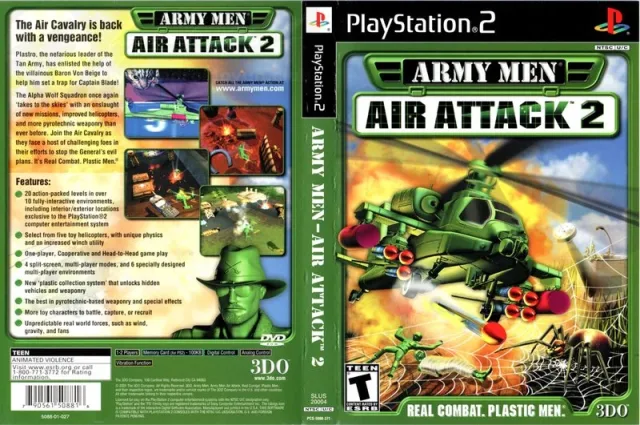
0.5GB Army Men - Air Attack 2
Action 2000

The pitch was a number. Hundreds of rioters rendered at once, filling a shopping mall concourse with panic, all of them shoving and screaming and scattering when a shotgun went off. In 2002 that was a genuine technical boast, and VIS Entertainment built the whole thing around it: Capital City as a set of enclosed districts stuffed with more moving figures than a PS2 was supposed to manage. Rockstar published it, which in the post-GTA III climate meant the tabloids arrived before the reviews did.
Underneath the mob, the design is closer to an arcade brawler than to the open-world game people expected. Kaos mode is the honest version: a timer, a score, a district, and a running instruction to break as much as possible before the clock dies. Weapons are whatever is bolted down or lying around, from tear gas launchers to a torn-off street sign, and the melee has a satisfying weight to it that the shooting never quite finds. Revolution mode wraps the same arenas in mission structure, sending you on errands for a resistance group against the ruling Corporation. Those errands are thin. Fetch this, escort that, destroy the other, mostly against enemies who behave identically whichever alley you meet them in.
What holds up is the texture of the crowd. Civilians have their own agenda, looting storefronts and trampling each other, and the game is at its best when your own violence is barely the loudest thing happening. Grab a fleeing shopper and use them as a shield and the systems briefly click into something no other game of the period was doing. The satire, on the other hand, is nothing. A faceless megacorp and some slogans, delivered with none of the writing Rockstar's other output was known for.
The districts wear out fast. Once you understand that every zone is a loop of shops and stairwells with a score multiplier attached, the novelty of scale stops carrying it, and the camera fights you in the tighter interiors more than the riot police ever do. Play it in short bursts and it still works as a stress-release machine. Play it for an evening and you notice how little the mob wants from you beyond a target.
It survives less as a good game than as an artefact of the moment when publishers discovered outrage was cheaper than content, and hardware finally let a screen fill up with people who had nowhere to run.
0.5GB  1.1GB
1.1GB  0.4GB
0.4GB  1.8GB
1.8GB  1.5GB
1.5GB  1.0GB
1.0GB  2.6GB
2.6GB  0.7GB
0.7GB loading comments…