 0.5GB
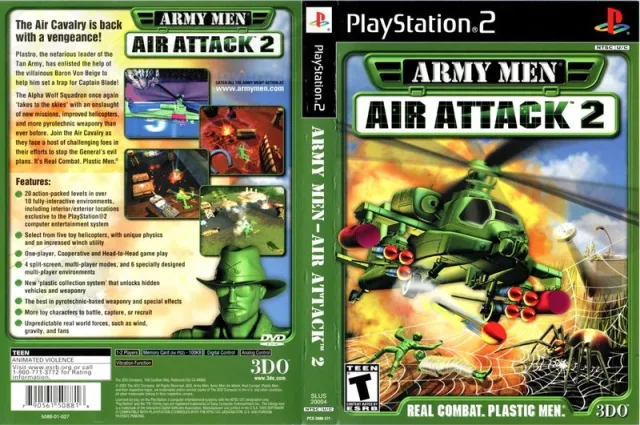
Army Men - Air Attack 2
Action 2000
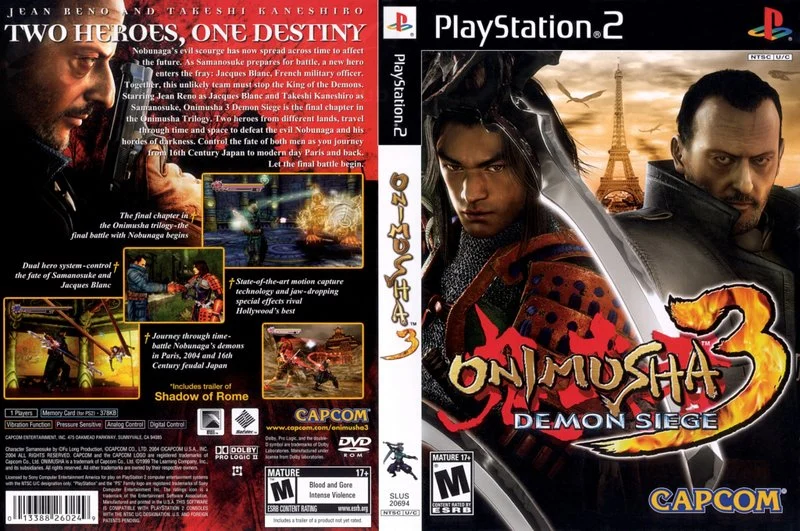
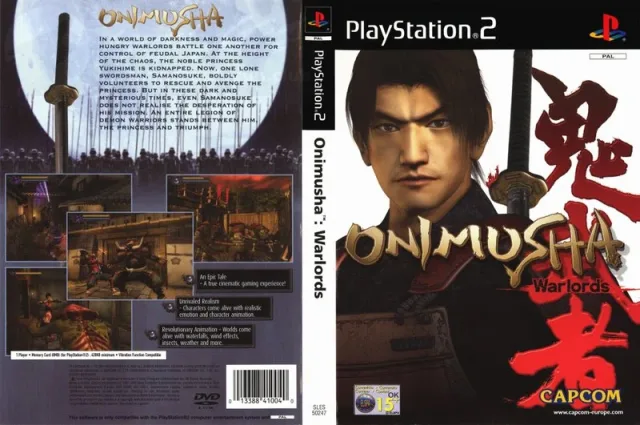
Most sequels are content to add a number to the title. Onimusha 3 split its hero in two instead, and that decision shapes everything about it. Samanosuke Akechi fights through sixteenth-century Japan, while Jacques Blanc, played by Jean Reno in a motion-captured likeness, is a French soldier pulled through a rift into the present-day Paris of the game's opening. The two storylines are tied together by the demon lord Nobunaga and his Genma army, and the game moves between them rather than tacking one onto the other.
The contrast is not just a matter of costume. Samanosuke carries on the series tradition: katana work, absorbing souls from fallen enemies, and the elemental powers of his gauntlet. Jacques wields a different style of weapon and brings a pace of his own, and the game gives each of them a distinct feel in combat. That variety counts for a lot in a series where the bones of the fighting rarely change. Capcom also introduced a small helper creature called a Ranmaru-like companion in the French sections that you sometimes control for simple tasks; I will not claim more about it than that.
What the game keeps from its predecessors is the Resident Evil-descended structure: pre-rendered style staging, fixed angles, puzzles that reward a careful look at the environment, and a steady drip of upgrades. What it changes is the tone. The Paris sections trade shrines and castles for streets and catacombs, and the visual shift is the game's strongest argument that the series had not run out of places to go. Fights remain built around the issun, a precise counterattack timing that rewards patience over button mashing.
Played today, the rough edges show. Fixed cameras still hide enemies at awkward moments, and the puzzle pacing can stall a game that wants to be moving. It is also short by modern standards. But the combat has a crispness that many later action games fumbled, and the dual-protagonist structure still feels like a confident idea rather than a gimmick.
It is a fitting last chapter for the original run of the series, one that ends by looking outward instead of repeating itself.
0.5GB  1.1GB
 0.4GB
 1.5GB
 1.0GB
 2.6GB
 0.7GB
 1.1GB
loading comments…