 0.5GB
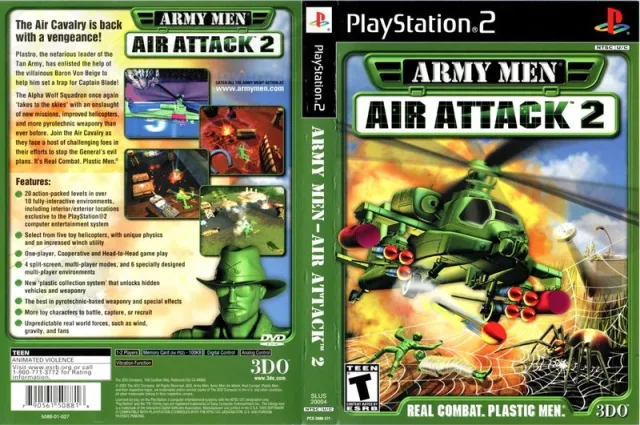
Army Men - Air Attack 2
Action 2000
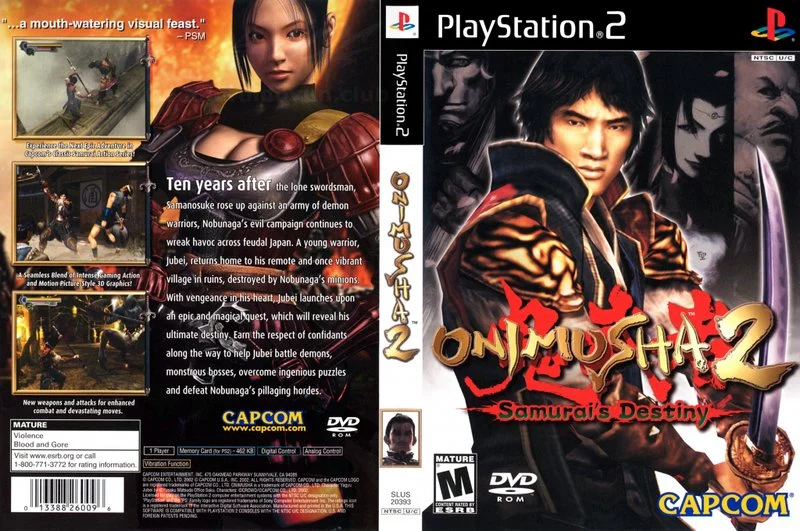
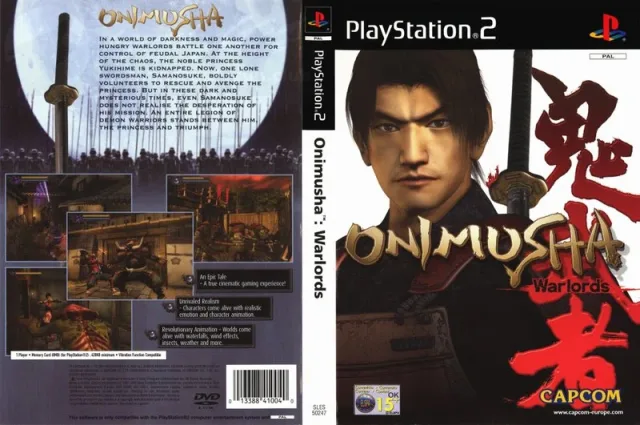
The most interesting thing about this sequel is not the sword work but the gift list. Early on, Jubei Yagyu learns he can give presents to the people he meets, and what he gives, and how well it suits them, decides who will fight beside him later. It is a small social layer bolted onto a series that had previously been strictly about killing demons, and it changes the rhythm of the whole game.
The story sends Jubei after Nobunaga Oda's forces, who have destroyed his home village, and the trail runs through a series of Japanese locations rendered as pre-drawn backdrops with fixed camera angles. That was the Resident Evil approach inherited by Capcom's own team, and here it works for the setting more than the tension. Backgrounds look like painted scenes, and the camera frames fights like a film director rather than a player.
Combat is where the series earned its reputation. Jubei carries several elemental weapons, and the core move is the issen, a counter-timed strike that kills outright if you land it just as an enemy swings. Demons drop souls that you absorb to recharge health, magic, or power up gear, so each skirmish feeds into the next. Mastering the timing is satisfying in a way button-mashing never is. The puzzles are lighter and more forgiving than in the first game, and the pace is brisker as a result.
It has aged unevenly. Tank-style controls and awkward camera cuts can still make a simple turn feel like a negotiation, and the main adventure is short enough that the gift system and unlockable extras are what give it replay value. Voice acting is serviceable rather than memorable. Yet the combat remains crisp, and the idea that your choices outside a fight could change who stands with you inside one was uncommon for the genre at the time.
What survives is a confident, compact action game that knows exactly what it is. It does not reinvent its predecessor, but it quietly adds the one feature that makes you care who you are fighting for.
0.5GB  1.1GB
 0.4GB
 1.8GB
 1.5GB
 1.0GB
 2.6GB
 0.7GB
loading comments…