 1.4GB
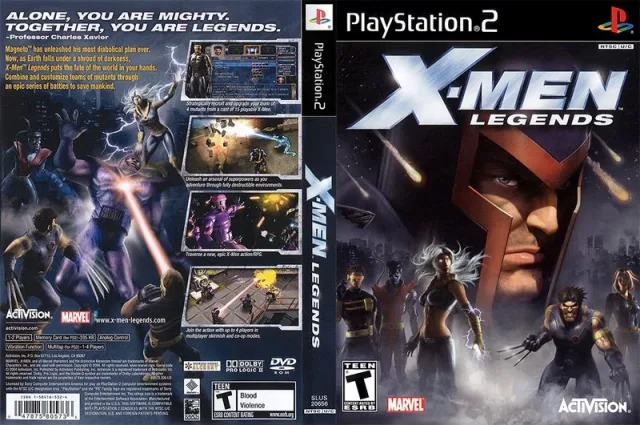
X-Men Legends
Action 2004
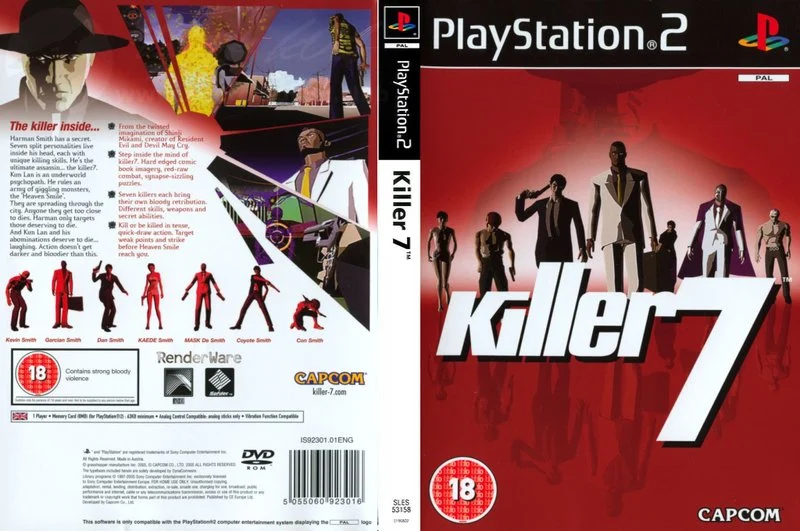
The enemies announce themselves by laughing. You cannot see them until you drop into first person and scan the corridor, and by the time the giggle is loud enough to locate, the Heaven Smile is often close enough to detonate in your face. That single feedback loop — sound, then stillness, then a shot placed in a specific weak point — is the whole combat system, and it works because the game refuses to let you move and aim at the same time.
Movement is on rails. You hold a button to walk forward, tap another to turn around, and choose directions at junctions from a menu. In 2005 this read as either a bold formal choice or a technical shrug, depending on who you asked. Played now, the intent is clearer: Grasshopper Manufacture wanted a shooter where looking is an action with a cost, and where architecture unfolds like a series of framed shots rather than a space you wander. The concession is real, though. Backtracking through the same corridors to solve a switch puzzle is tedious in a way no amount of style covers.
The seven playable personalities are the other half. Harman Smith hosts a syndicate of assassins inside himself, and each one is a different gun and a different set of abilities — a sniper, a woman with a Magnum, a masked heavy who soaks damage. You swap between them freely at designated points, and Garcian, the cleaner, is the one who retrieves the others when they die. Lose Garcian and the mission ends. That hierarchy turns character selection into a resource question rather than a preference.
Everything else is texture, and the texture is why people still talk about this thing. Cel-shaded figures against flat hot colour, a political conspiracy about US-Japan relations delivered through a talking severed head and a man in a gimp mask, blood harvested from corpses and spent on upgrades at a phone in a bathroom. Suda51's script is deliberately hard to hold in one hand, and the Hand in Killer7 subplots arrive with no interest in clarifying themselves. It is not obscure for its own sake so much as indifferent to whether you keep up.
Capcom published it as part of the Capcom Five and it sold poorly, which surprised nobody. What survives is a game that made its restrictions into an argument, and an argument that almost nothing since has bothered to answer.
1.4GB  0.5GB
 1.1GB
 0.4GB
 1.8GB
 1.5GB
 1.0GB
 2.6GB
loading comments…