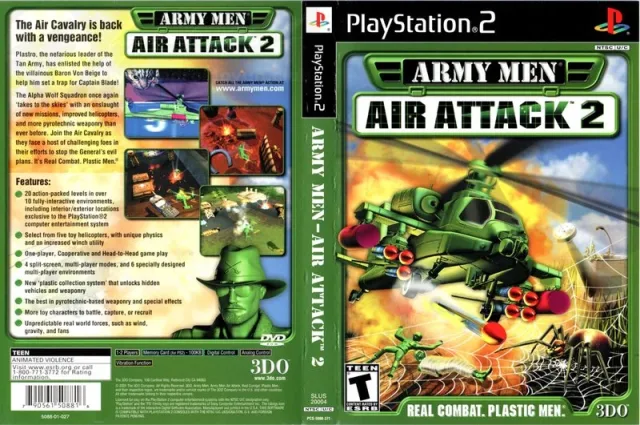
 0.5GB
0.5GB Army Men - Air Attack 2
Action 2000

The radiator was the new part. FromSoftware moved the fight to a terraformed Mars for its first PlayStation 2 outing and gave every machine a heat gauge, which meant that the thing most likely to kill you was your own back-mounted energy weapon fired one shot too many in a desert corridor. Cooling suddenly mattered as much as armour, and a build that looked immaculate on the garage screen could redline in the field. That single addition reframed the whole loadout screen.
Everything else runs on the series' familiar economy of consequence. Corporations hand out contracts, you fly in, and whatever ammunition you spent and armour you lost is deducted from the payout at the debriefing. Fail badly enough and you finish a successful mission owing money. The part list is enormous and mostly unhelpful without experimentation: legs that trade load capacity for boost speed, arm weapons with wildly different lock times, generators that decide how long you can hover before dropping like scrap. Tuning points let you nudge individual components, which is either fussy bookkeeping or the best part of the game depending on how you are wired.
The controls are the barrier and always were. Twin-stick free look was not yet the default, so aiming a strafing hover-tank with shoulder buttons feels archaic on first contact and then, some hours later, feels like a language. Once boost-strafing and lock cones click, the arena ladder becomes a genuine test of reading an opponent's build before the first exchange. Mission design is terse and often cruel, with cramped interiors that punish a heavy frame and open Martian plains that punish a light one.
As a launch-window title it looked like proof the hardware could hold real scale, and the frame rate mostly cooperates. As a game now, it holds up better than its reputation for opacity suggests, because nothing in it is decorative. Every stat on every part is a promise the mission will collect on. Sitting in the garage with a spreadsheet's worth of numbers, deciding what to sacrifice, is where the real fight happens.
0.5GB  1.1GB
1.1GB  0.4GB
0.4GB  1.8GB
1.8GB 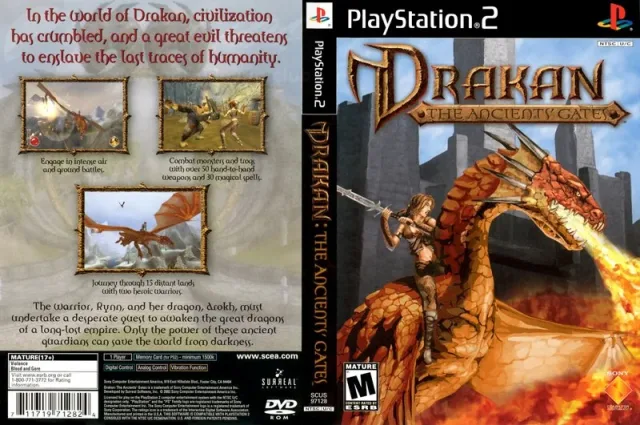 1.5GB
1.5GB 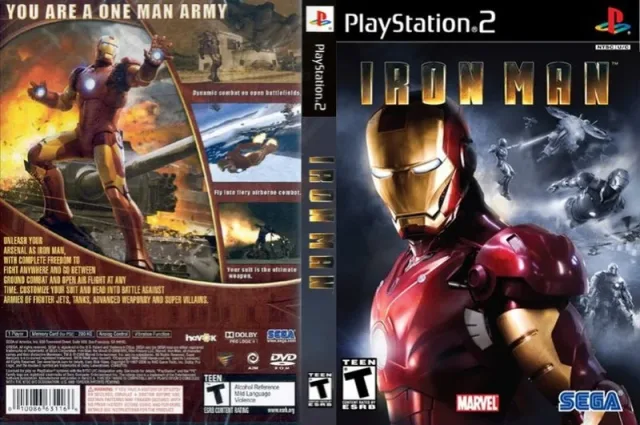 1.0GB
1.0GB  2.6GB
2.6GB  0.7GB
0.7GB loading comments…