 1.6GB
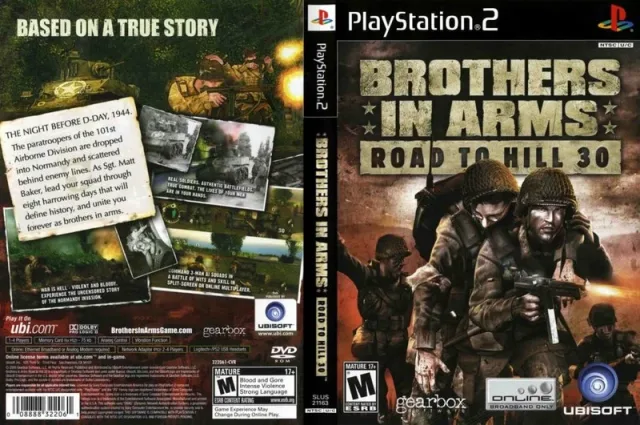
1.6GB Brothers in Arms - Road to Hill 30
Shooter 2005

The box came with a headset, and that was the pitch. Not a bonus, not a peripheral you'd forget in a drawer, but the intended way to command Bravo and Able: you held a button, spoke a phrase like "fireteam, cover that door," and two AI soldiers actually did it. In 2002 this was closer to a magic trick than a feature. Voice recognition on console hardware had a reputation for failing loudly, and Zipper Interactive's version was imperfect too, but it worked often enough that saying an order out loud in a dark living room felt genuinely strange in a way pressing a d-pad direction never did.
Underneath the gimmick was a disciplined third-person tactical shooter that took its cues from PC squad games and trimmed them into something a controller could carry. Missions ran through Alaska, Thailand, Turkmenistan and the Congo, each one a checklist of objectives — hostages, demolitions, extraction points — laid over maps that punished carelessness. Rifle rounds killed fast, in both directions. A single unseen sentry could end a run that had gone perfectly for ten minutes, and there was no regenerating health to argue with the outcome.
The AI teammates were the compromise. They handled straightforward instructions well and collapsed into confusion when a firefight got messy, which meant most players eventually settled into a rhythm of parking them somewhere safe and doing the delicate work alone. That's the honest limit of the design. The commands were a language with too few words for the situations the levels invented.
What kept it alive was the online mode. This was one of the first PS2 games built around the Network Adapter, and its sixteen-player matches with voice chat effectively taught a console audience what organised team shooting sounded like. Rounds were short, elimination-based and unforgiving; dead players watched and talked, and the talking became half the point. Communities formed around clan tags and map knowledge months before anyone on console had a broader framework for that kind of thing.
Played now, the campaign shows its seams — stiff animation, checkpointing that tests patience, squad orders that want more nuance than the parser can supply. The lethality has aged better than almost anything else about it, because it forces the slow approach the level design was always built around. Rush a compound and you will die in under a second, over and over, until you stop rushing.
1.6GB  3.5GB
3.5GB  1.9GB
1.9GB  3.0GB
3.0GB  2.4GB
2.4GB  0.7GB
0.7GB 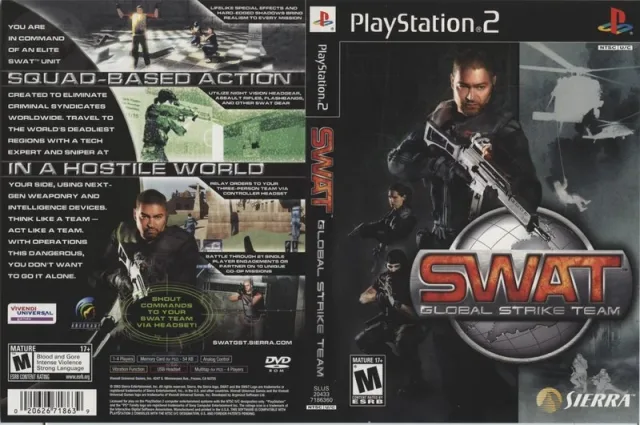 1.7GB
1.7GB  0.3GB
0.3GB loading comments…