 1.6GB
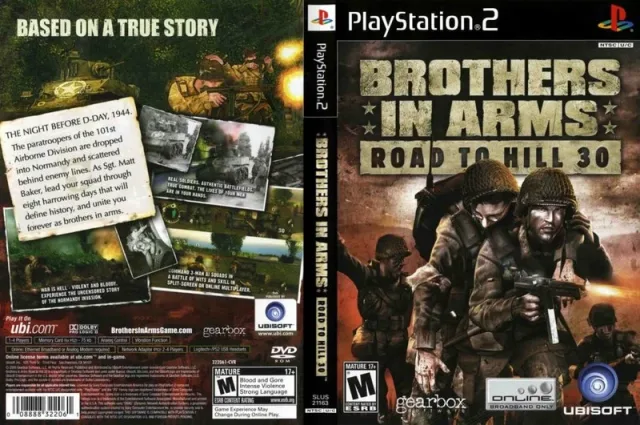
1.6GB Brothers in Arms - Road to Hill 30
Shooter 2005

The plastic headset that came in the box changed how people played this thing. You held down a shoulder button and said "Bravo, fire at will" or "Able, hold position," and the AI teammates actually moved. It was crude speech recognition by any modern standard, and it misheard you often enough to be funny, but in 2003 it was the closest a console had come to commanding a squad rather than babysitting one. More importantly, once the mission ended and you went online, the same microphone became the tool that made a stranger's voice in your ear part of the tactical picture.
Zipper Interactive built the single-player campaign as a tour of politically convenient hotspots, moving a four-man element through jungle, city and mountain in objective chains that usually meant securing a hostage, planting a charge, or intercepting a convoy before an alarm turned the map hostile. The shooting is deliberate. Enemies drop fast when you aim carefully and you drop just as fast when you sprint into an open street, which pushes you into the crouch-walk creep that defined the series. The AI on both sides is dumber than the mission design pretends, and any veteran learns to run the whole campaign as a two-man split with Bravo parked as bait.
Online is where SOCOM 2 earned its reputation, and it is the argument for the game's place in PS2 history. Sixteen players, SEALs against terrorists, and no respawns. You get one life per round, so a bad first thirty seconds means several minutes of watching. That single rule did more for the game's atmosphere than any graphical trick: teams whispered, held angles, and treated ammunition and information as scarce. Demolition, extraction and suppression rotated the objectives, but the tension always came from the same source, which was the knowledge that dying was permanent until the round clock ran out.
What has aged is the presentation. Textures are muddy even for 2003, the frame rate sags in smoke, and the third-person camera hides as much as it reveals when you hug a wall. What has not aged is the pacing. Modern military shooters have largely abandoned the idea that a firefight should be something you avoid, and playing this now is a reminder of how much drama a designer can squeeze out of simple scarcity.
The servers went dark long ago, and with them the clans, the ladders and the arguments about whether the shotgun was broken. The campaign still stands on its own, but anyone who logged serious hours here remembers the game as a room full of voices rather than a set of levels.
1.6GB  3.5GB
3.5GB  1.9GB
1.9GB  3.0GB
3.0GB  2.4GB
2.4GB  0.7GB
0.7GB 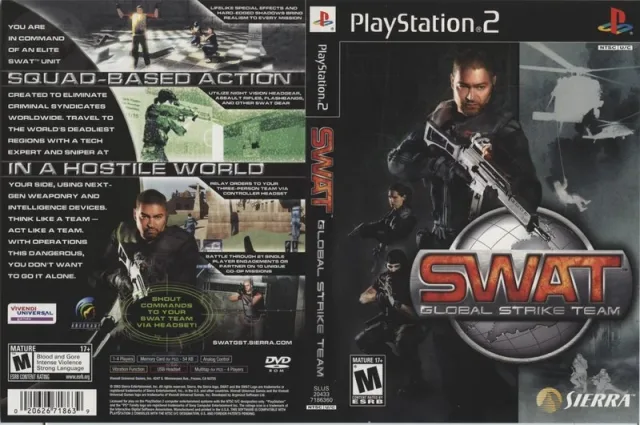 1.7GB
1.7GB  0.3GB
0.3GB loading comments…