 1.6GB
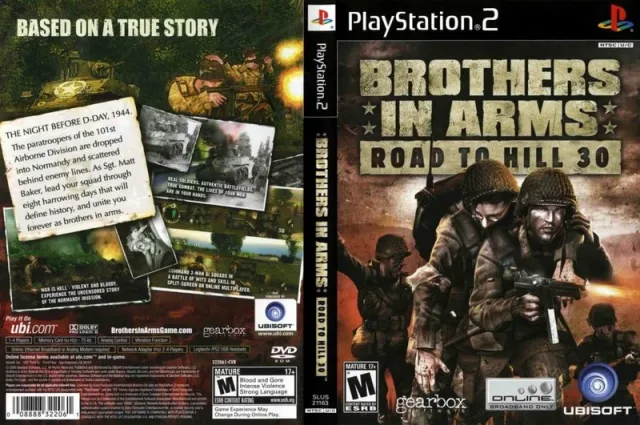
Brothers in Arms - Road to Hill 30
Shooter 2005
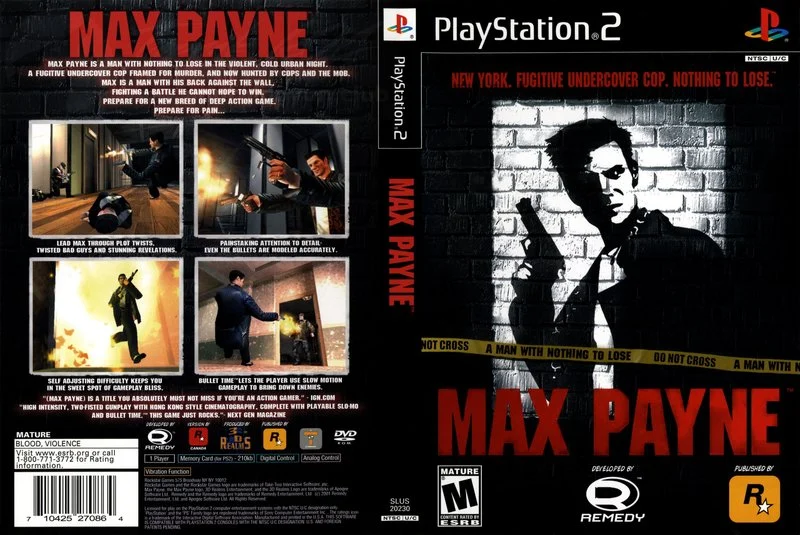
The shootdodge is the move nobody forgets. Press the button and Max launches sideways through a doorway, time stretching to syrup, the camera swinging to follow him while he empties a pair of Ingrams into three men who have not finished turning around. Then he hits the floor, and he is lying on the floor, slow and vulnerable, with whoever survived still standing. That trade-off is the whole design: every second of slow motion is paid for with a second of helplessness, and the game never lets you forget the bill.
Remedy built it in 2001 as a love letter to Hong Kong action cinema filtered through hardboiled American crime fiction, and the tone is pitched so far into the red that it comes out the other side as sincere. Max narrates his own misery in metaphors that would be embarrassing if they were not so committed. The story is told in still comic panels with voice-over rather than engine cutscenes, a choice forced by budget that ended up giving the game a visual identity nothing else had. New York is permanently mid-blizzard, every interior is a stairwell or a boiler room, and the body count climbs past any sane number.
The PS2 version, handled by Rockstar's Toronto studio, had to answer the obvious question of how a game built around precise mouse aiming works with two sticks. The answer is a soft auto-aim that snaps to torsos, which makes the firefights faster and less surgical. You lean on bullet time for repositioning more than for headshots. Purists at the time called it a compromise and they were right, but it is a compromise that keeps the pace intact rather than turning the game into a fight with the controller.
What has aged worst is the platforming. The nightmare sequences, where Max follows a trail of blood along invisible pipes over a black void while a baby screams, were tedious in 2001 and time has not been kind. The level geometry is boxy, the enemy AI amounts to advancing and shooting, and painkillers as a health system means you spend the hard sections rifling through medicine cabinets.
None of that touches the core. Six hours of corridors, a man who talks like a paperback, and a slow-motion button that still feels better than most of what came after it. The genre absorbed bullet time so thoroughly that it became furniture, which is the strange fate of a genuinely new idea: it stops looking new. Load this up and watch it work anyway.
1.6GB  3.5GB
 1.9GB
 3.0GB
 2.4GB
 0.7GB
 1.7GB
 0.3GB
loading comments…