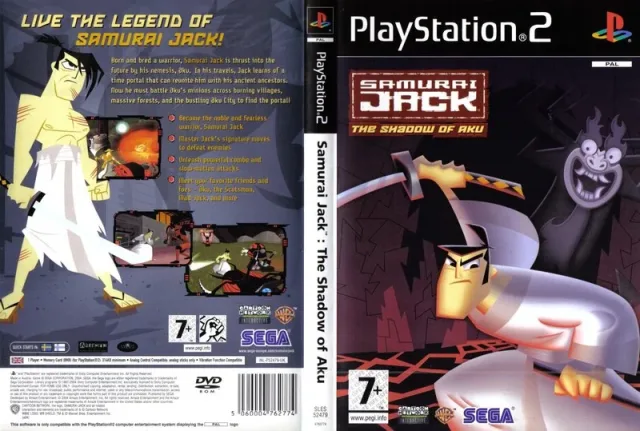
 1.0GB
1.0GB Samurai Jack - The Shadow of Aku
Hack and Slash 2003

Somewhere in the middle of the second act you stop reading item names and start reading sockets. That is the shift this sequel makes: the loot no longer arrives finished. Gems drop, runes drop, and a smith in the city will fuse them into whatever weapon you hand over, which means a plain longsword you found in a sewer can outlive three flashier replacements if you keep feeding it. For a 2004 console dungeon crawler, that was a genuine hook rather than a menu screen.
The structure is otherwise familiar to anyone who played Snowblind's original. Five heroes this time, each with a distinct feel — a drow monk who fights fast and fragile, a dwarf rogue built around traps and thrown weapons, a necromancer who props up his own HP with summoned help — and each with an opening chapter that ties them to the plot rather than just reskinning it. Baldur's Gate itself functions as the hub, and the side quests handed out around the Elfsong Tavern do more work than they need to, sending you back into cleared areas with a reason to be there.
Combat is still a single attack button, a block, and a wheel of feats and spells mapped to the shoulders, and it is still satisfying in the blunt way isometric brawlers are. Bosses lean on pattern reading more than the first game did. Some of the later fights ask for damage output the game will only give you if you have been engaging with crafting, which quietly makes the system mandatory rather than optional. Two players can drop in on the same screen, and the game is plainly better that way, because the camera pulls back and the tactical spacing suddenly matters.
What has aged is the pacing. Level layouts run long, backtracking is common, and the story never quite justifies the hours between set pieces. The engine still looks good for the hardware, though — coloured light spilling off spells onto wet stone was Snowblind's signature and Black Isle kept it.
Interplay came apart shortly after this shipped and Black Isle went with it, so the cliffhanger the game ends on has stayed unresolved for two decades. It plays like a studio at the top of its craft, unaware it is finishing.
1.0GB  2.0GB
2.0GB  3.5GB
3.5GB  3.3GB
3.3GB  2.4GB
2.4GB  0.7GB
0.7GB  3.4GB
3.4GB  3.0GB
3.0GB loading comments…