 2.9GB
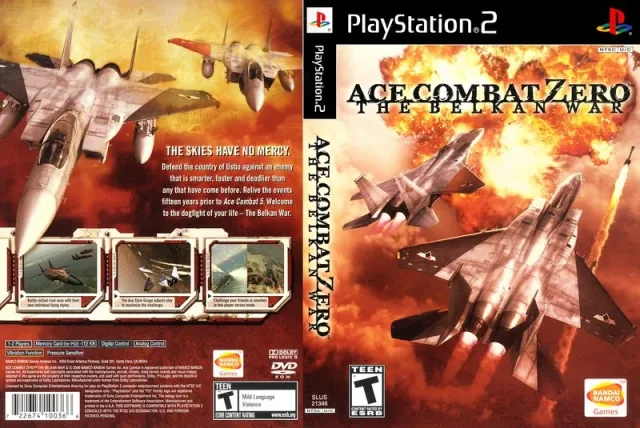
2.9GB Ace Combat Zero - The Belkan War
Flight 2006

The D-pad is a radio. That single design choice separates Namco's fifth Ace Combat from everything around it: hold a direction mid-turn and you are telling Nagase to break off, telling Grimm to cover you, telling Chopper to shut up and hold formation. The squadron talks back constantly, over the engine noise, over the missile alarms, and by the halfway point you know their voices well enough to hear when one of them is in trouble before the warning tone confirms it.
The flight model is unapologetically arcade. Planes turn on a dime, missiles come in bundles of eighty, and altitude is a suggestion rather than a physics problem. What Project Aces understood is that this is a virtue when the mission design is doing real work. Sorties here have shape: a night infiltration under radar cover, a long tunnel run, an escort that quietly becomes a rescue. Briefings are delivered straight, with maps and threat assessments, and then the mission bends out from under the plan. Very few flight games of the sixth generation bothered to write their objectives as drama rather than checklists.
The war itself is Osea against Yuktobania, and the plot is a conspiracy story about who benefits from two large countries shooting at each other. It is told partly in cutscene and partly in cockpit chatter, which is where it works best. Losing a wingman lands because you have spent twenty hours issuing them orders. The Keiki Kobayashi score, with its choral title theme, carries more of the emotional load than the writing does, and it earns the right to.
Age has been kind in odd ways. The clouds and the water still read well at speed, though the ground textures do not survive close inspection, and the plane models look better than the terrain they fly over. Unlocking the aircraft tree encourages replay, and the mission branching gives some runs a different shape. The difficulty is generous by design; this was never meant to punish, only to make you feel like the best pilot in a bad war.
Most military shooters of the era tried to earn gravity through grimness. This one earned it by making you responsible for three other people in the sky, and then taking them away one at a time.
2.9GB  2.5GB
2.5GB  1.4GB
1.4GB  1.7GB
1.7GB  1.6GB
1.6GB  0.5GB
0.5GB  3.5GB
3.5GB  1.9GB
1.9GB loading comments…