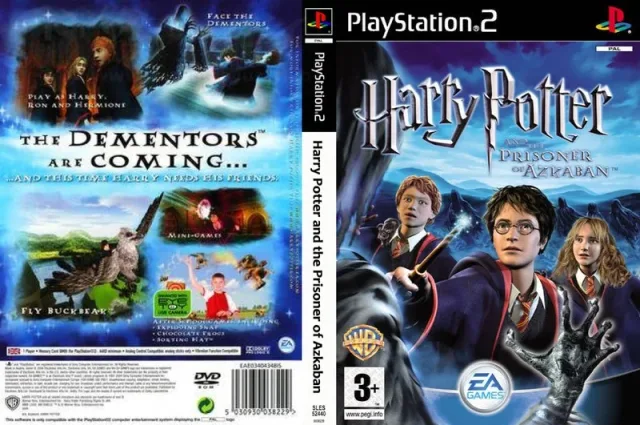
 1.7GB
Harry Potter and the Prisoner of Azkaban
Adventure 2004
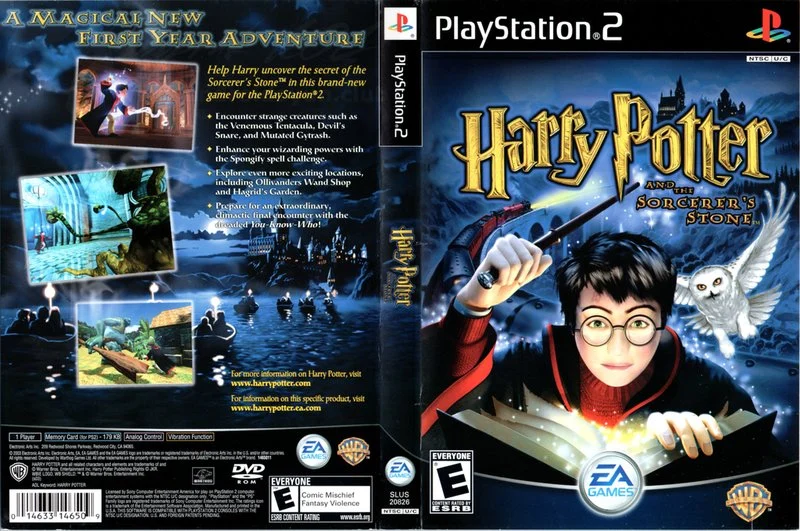
Tracing a shape with the right analog stick to cast Wingardium Leviosa is not something many licensed games have asked of a player, and it tells you most of what you need to know about the PlayStation 2 take on Harry Potter's first year. Warthog got the job a year after the film's release and built something separate from the PS1 and PC versions rather than porting them. Spells here are drawn, not pressed. Flipendo needs a flick, Lumos a curl, and Charms class exists to drill the motions into your thumb before the castle starts testing them.
When the recognition cooperates, there is a real pleasure to it: hovering a crate into place while a Cornish pixie circles you feels like work rather than a button prompt. When it does not cooperate, and it frequently does not, you are redrawing the same glyph three times while something chews on you. The idea was ahead of the input device. A gesture system on a stick with no pressure feedback was always going to be approximate, and the 2003 hardware gave the developers nothing to sand off the rough edges.
Structurally it is a hub adventure. Hogwarts is broken into corridors, courtyards and locked doors that open as your spellbook grows, with Bertie Bott's beans and Famous Wizard cards scattered around to reward players who poke at the scenery. Classes gate progress, house points nudge you toward completeness, and Quidditch arrives as a scripted broom chase rather than a sport. The level geometry leans on the films for its silhouettes but fills the gaps with invented basements and greenhouses, which gives the castle a bigger, more explorable feel than the tie-in economy usually bothered with.
What holds up is the sense of place. Moving pictures, staircases that go where they please, prefects who send you back to bed after curfew — the small texture is there, and the camera is generous enough to let you look at it. What has aged worst is the combat, a matter of pointing a flick at a beetle until it stops moving, and the difficulty spikes in the mine cart and final chamber sequences that were clearly tuned by adults for children who would ask an adult for help.
It is a curious artifact: a children's licence used as a testbed for an input idea that nobody else wanted to risk. Clumsy, occasionally charming, and more interesting for having tried.
1.7GB  2.2GB
 1.4GB
 2.5GB
 1.0GB
 0.6GB
 0.4GB
 1.4GB
loading comments…